
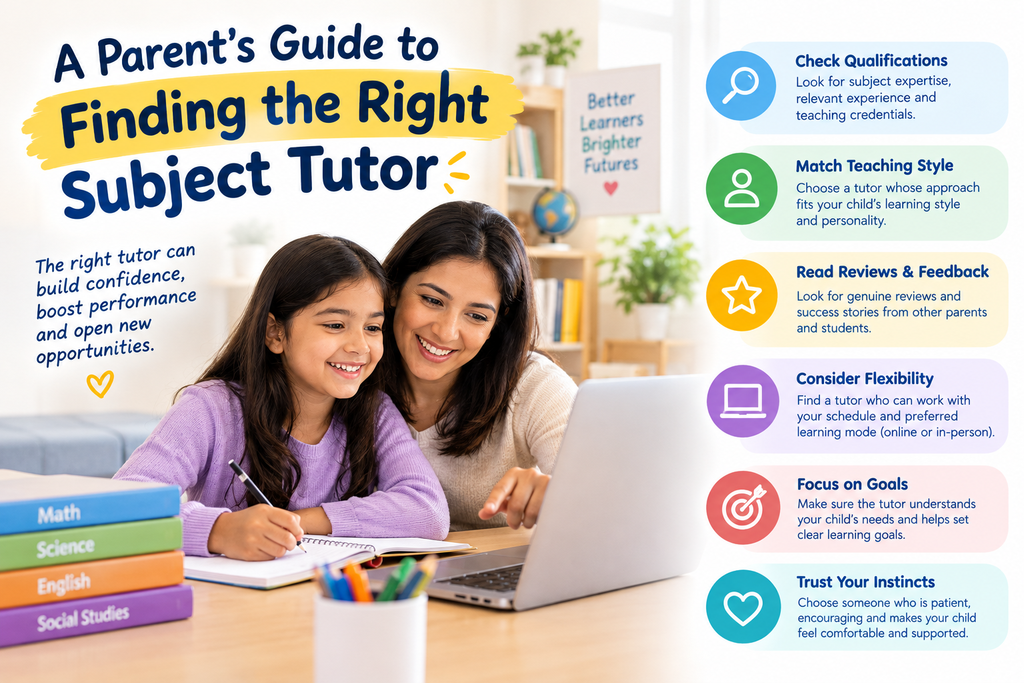
Finding the Right Subject Tutor for Your Child
Every child has different learning needs, strengths, and challenges. While some students understand concepts quickly in the classroom, others may need extra explanation, regular practice, and individual attention to feel confident. This is where choosing the right subject tutor can make a meaningful difference in a child’s academic journey.
For parents, finding a tutor is not simply about improving marks. It is also about helping children develop a clear understanding of subjects, build confidence, and develop effective study habits. Whether your child struggles with mathematics, needs help with science, or wants to improve English, the right tutor can provide the guidance they need.
Choosing the best online tuition class starts with understanding your child’s requirements and identifying a tutor whose teaching style, experience, and approach match those needs.
1. Understand Your Child’s Learning Needs
Before searching for a subject tutor, take some time to understand where your child needs support. Every student has a different learning style, and identifying specific challenges makes the selection process easier.
Ask yourself a few questions:
- Which subject does your child find most difficult?
- Are they struggling to understand concepts or complete homework?
- Do they need help preparing for school examinations?
- Would they benefit from additional practice or individual attention?
- Do they lack confidence when answering questions?
For example, a child who struggles with mathematics may need step-by-step explanations and regular problem-solving practice. A student who finds English difficult may benefit from grammar exercises, reading activities, and vocabulary-building sessions.
Understanding these needs helps parents choose a tutor who can provide focused support rather than general academic assistance.
2. Look for Strong Subject Knowledge
A good subject tutor should have a strong understanding of the subject they teach. However, knowing a subject well is only one part of effective teaching. The tutor must also be able to explain complex concepts in simple, understandable language.
When evaluating a tutor, consider their educational background, teaching experience, familiarity with the school curriculum, and ability to answer students’ questions.
For school students, it is especially important to choose someone who understands their class level, syllabus, and examination requirements.
A knowledgeable tutor can identify common mistakes, explain difficult topics using examples, and help students develop a stronger foundation for future learning.
3. Choose a Teaching Style That Suits Your Child
Children learn at different speeds. Some understand concepts through visual examples, while others learn better through discussions, written exercises, or practical demonstrations.
The right tutor should be patient and flexible enough to adjust their teaching methods according to the student’s needs.
Look for a tutor who:
- Explains concepts using simple examples.
- Encourages children to ask questions.
- Checks understanding before moving to the next topic.
- Provides practice exercises and constructive feedback.
- Revisits difficult concepts when necessary.
A supportive teaching environment helps children feel comfortable discussing their doubts instead of memorising information without understanding it.
4. Consider Online Tuition for Greater Flexibility
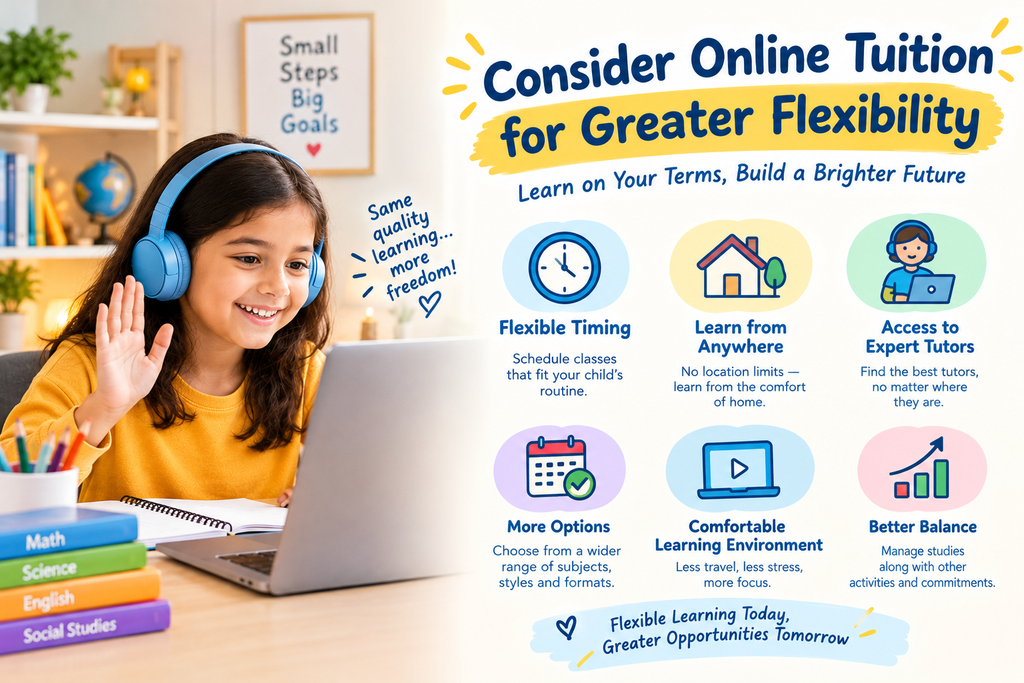
Online tutoring gives families the opportunity to access academic support from home. It can reduce travel time and make it easier to schedule lessons around school hours, homework, and extracurricular activities.
Parents exploring the best online tuition class should look for a learning arrangement that combines convenience with quality teaching.
Before choosing online tuition, check whether the classes offer:
- Live interaction between the tutor and student.
- Opportunities to ask questions during lessons.
- Digital learning materials and practice assignments.
- Regular assessments and feedback.
- A suitable class schedule.
Online tuition works best when students have a comfortable study space, a reliable internet connection, and a routine that allows them to participate actively.
5. Check the Tutor’s Communication Skills
Good communication is essential for effective learning. A tutor should be able to explain ideas clearly, listen carefully, and understand why a student is finding a particular topic difficult.
Notice how the tutor responds when your child makes a mistake. A good tutor treats mistakes as learning opportunities rather than reasons for criticism.
The tutor should also communicate with parents about completed topics, learning challenges, homework, and areas that need improvement.
Regular communication allows parents to understand their child’s progress and provide support at home when necessary.
6. Ask About Progress Tracking and Assessments
Choosing a tutor should involve more than checking qualifications or attending a trial class. Parents should also understand how the tutor will measure improvement over time.
A reliable tutor may use short tests, quizzes, homework reviews, oral questions, and periodic assessments to evaluate understanding.
Before enrolling your child, ask:
- How will progress be measured?
- How frequently will assessments take place?
- Will parents receive progress updates?
- How will the tutor address weak areas?
- Will the teaching plan change as the child improves?
Progress tracking helps parents identify whether the tutoring arrangement is meeting their child’s needs. Remember that improvement may include better understanding, increased participation, and greater confidence—not just higher marks.
7. Look for Patience, Encouragement, and Individual Attention
Children may sometimes hesitate to ask questions because they are afraid of making mistakes. A patient tutor creates a positive environment where students feel comfortable learning at their own pace.
Individual attention can be particularly useful for students who need additional explanations or more time to practise specific concepts.
When comparing options for the best online tuition class, consider whether the tutor provides opportunities for personal interaction and adapts lessons to the child’s progress.
Encouragement should also be balanced with clear expectations. A good tutor motivates students while helping them develop discipline, responsibility, and independent learning habits.
8. Compare Fees, Schedules, and Overall Value
Tuition fees are an important consideration for families, but the lowest price does not always represent the best value.
Compare what each tutor or tuition provider offers, including lesson duration, teaching frequency, learning resources, assessments, and opportunities for individual attention.
Also, check the cancellation policy, payment terms, and availability of trial sessions before making a decision.
Choose an arrangement that fits your family’s budget and provides consistent academic support. Avoid selecting a tutor based only on promises of guaranteed marks or instant results.
9. Start With a Trial Class
Whenever possible, arrange a trial session before committing to long-term tuition. This allows you and your child to evaluate the tutor’s teaching approach and communication style.
After the session, ask your child whether the explanation was easy to understand, whether they felt comfortable asking questions, and whether the lesson helped clarify the topic.
Parents should also observe whether the tutor listened to the child’s concerns and explained the material at an appropriate level.
A trial class provides useful information, although consistent progress over several weeks is a better indicator of whether the tutor is a suitable long-term choice.
Why Choosing the Right Subject Tutor Matters
The right tutor can help children strengthen their subject knowledge, overcome learning difficulties, and develop better study habits. However, tutoring is most effective when the tutor, student, and parents work together toward clear learning goals.
Parents should review progress regularly, encourage children to practise independently, and communicate openly with the tutor about any concerns.
If you are exploring the best online tuition class for your child, prioritise teaching quality, personalised support, clear communication, and measurable progress. These factors can help you make an informed decision based on your child’s actual needs.
Frequently Asked Questions (FAQs)
1. How do I choose the right subject tutor for my child?
Start by identifying your child’s weak subjects and learning goals. Then compare tutors based on subject knowledge, teaching experience, communication skills, teaching methods, and progress-tracking practices. A trial class can help you assess compatibility.
2. Is online tutoring effective for school students?
Online tutoring can be effective when lessons include live interaction, clear explanations, regular practice, and feedback. Its effectiveness also depends on the student’s participation, the tutor’s teaching quality, and a suitable learning environment.
3. Should I choose a subject specialist or a general tutor?
A subject specialist may be helpful when your child has difficulty with a particular subject or advanced topics. A general tutor may be suitable for broader academic support, depending on the child’s grade and requirements.
4. How can I know if my child is improving with a tutor?
Look for better conceptual understanding, fewer repeated mistakes, improved homework performance, active participation, and greater confidence. Regular assessments and communication with the tutor can provide additional evidence of progress.
5. What should parents look for in the best online tuition class?
Parents should evaluate tutor qualifications, personalised attention, interactive lessons, flexible scheduling, learning resources, progress reports, and transparent fees. The right choice should match the child’s academic needs and learning pace.
Conclusion
Finding the right subject tutor is an important step toward supporting your child’s academic development. By understanding their learning needs, checking the tutor’s expertise, evaluating teaching methods, and monitoring progress, parents can make a more confident decision.
The goal is not only to improve examination performance but also to help children become confident, curious, and independent learners. With consistent guidance and the right learning environment, students can gradually strengthen their understanding and approach academic challenges with greater confidence.
Explore Genie Classes to learn more about online learning options. Visit the About Us page to learn more about the platform, or use the Contact Us page to enquire about suitable learning support for your child.