
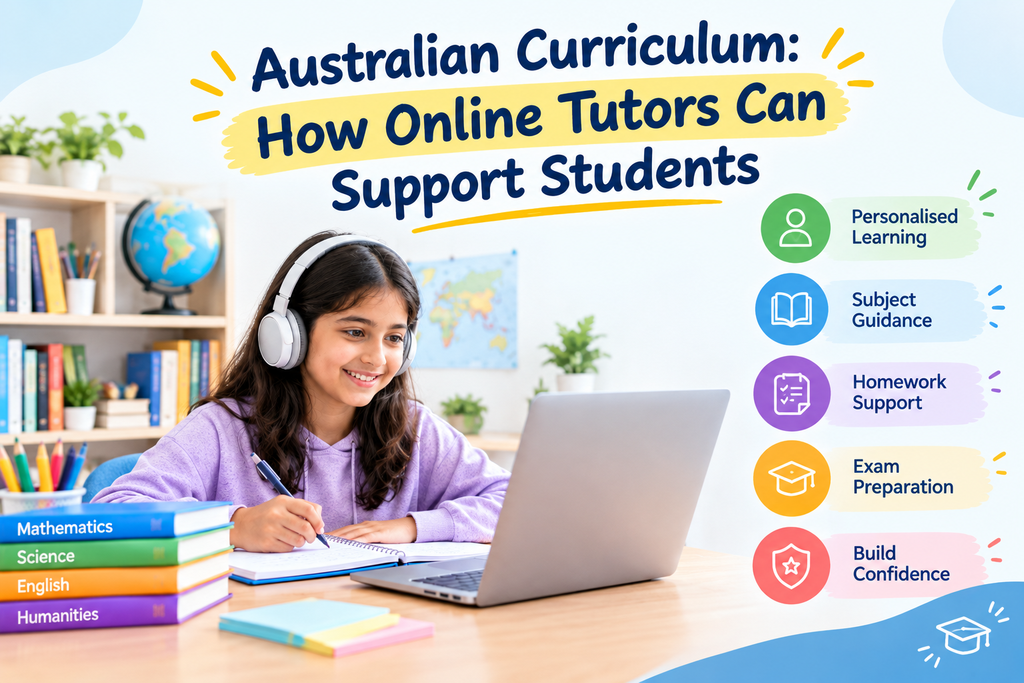
The Australian Curriculum helps students develop the knowledge, understanding, and skills they need throughout their school years. However, every student learns differently. Some children understand new concepts quickly, while others need extra explanations, practice, or individual attention to feel confident in class.
Online tutoring can provide additional academic support by helping students understand school subjects, practise essential skills, and work towards their learning goals. With personalised lessons and a structured study routine, students can receive help that complements their classroom education.
For parents exploring the best online tuition class, it is important to choose tutoring that considers the student’s year level, learning needs, schoolwork, and progress rather than simply focusing on completing homework.
Quick Answer: How Can Online Tutors Support Australian Curriculum Students?
Online tutors can support Australian Curriculum students by explaining difficult concepts, providing additional practice, reviewing homework, developing study skills, and helping learners prepare for assessments. Personalised online lessons can also identify learning gaps and allow students to progress at a suitable pace while complementing their school’s teaching programme.
Key Takeaways
- Online tutoring can reinforce concepts taught at school.
- Personalised lessons help address individual learning gaps.
- Subject-specific guidance supports English, Mathematics, Science, and other learning areas.
- Regular practice can improve problem-solving and independent learning skills.
- Communication between tutors, students, and parents can help keep learning goals clear.
- The right tutoring plan should complement the student’s school curriculum and assessment requirements.
1. Understanding the Australian Curriculum
The Australian Curriculum outlines what students should learn and the knowledge and skills they are expected to develop. From Foundation to Year 10, it covers eight learning areas: English, Mathematics, Science, Humanities and Social Sciences, Health and Physical Education, Languages, Technologies, and The Arts.
It also incorporates general capabilities, including literacy, numeracy, digital literacy, and critical and creative thinking. These skills are developed through learning across subjects rather than in isolation.
Parents can explore the official Australian Curriculum website to understand the learning areas and expectations for their child’s year level.
Because students may find different subjects or concepts challenging, additional academic support can help them strengthen their understanding and practise skills outside regular classroom lessons.
2. Personalised Lessons Based on Individual Learning Needs
Every student has different strengths, interests, and areas for improvement. In a classroom, teachers must manage the learning needs of multiple students. Individual online tutoring can provide additional time to focus on a particular learner.
A tutor may begin by discussing the student’s schoolwork, reviewing challenging topics, and identifying areas that need more practice. Lessons can then be adjusted according to the student’s understanding and learning pace.
For example, a student who understands basic fractions but struggles with word problems may benefit from guided examples and step-by-step explanations. Another student may need support with reading comprehension or writing structured paragraphs.
This personalised approach can help students build understanding gradually instead of memorising answers without knowing how to apply them.
3. Strengthening Mathematics and Problem-Solving Skills
Mathematics can become challenging when students move from basic calculations to more complex concepts. Topics such as fractions, decimals, algebra, measurement, geometry, and statistics require a strong foundation.
Online Mathematics tutors can help students by:
- Explaining concepts using clear, step-by-step examples.
- Breaking complex problems into smaller tasks.
- Providing additional questions for independent practice.
- Reviewing incorrect answers to identify misunderstandings.
- Encouraging students to explain their reasoning.
Rather than simply giving the correct answer, an effective tutor guides the student through the process of finding it. This encourages logical thinking and helps learners develop the confidence to approach unfamiliar questions.
4. Improving English, Reading, and Writing
English supports communication, comprehension, and learning across other subjects. Students may need help with spelling, grammar, vocabulary, reading comprehension, creative writing, or analytical responses.
Online English tutoring can offer focused practice in these areas. A tutor might work with a student on identifying the main idea of a passage, understanding unfamiliar vocabulary, organising paragraphs, or supporting an argument with relevant evidence.
Writing feedback can be particularly useful. Students can learn how to structure introductions, develop clear explanations, and edit their work for accuracy and clarity.
With consistent practice, learners can become more aware of their strengths and the specific skills they need to improve.
5. Supporting Science and Other Learning Areas
The Australian Curriculum includes more than English and Mathematics. Students may also benefit from support with Science, Humanities and Social Sciences, Languages, Technologies, and other subjects.
For Science, tutors can explain concepts, review key vocabulary, and help students understand the relationship between scientific ideas and real-world examples. In Humanities and Social Sciences, tutoring may involve interpreting sources, organising information, developing research skills, and constructing evidence-based responses.
The type of support should match the student’s year level and school requirements. Tutors can use examples, diagrams, guided questions, and practice activities to make unfamiliar topics easier to understand.
6. Helping Students Prepare for Assessments
Assessment preparation involves more than revising notes the night before a test. Students need to understand key concepts, practise applying their knowledge, and learn how to manage their time.
Online tutors can help students develop a revision plan that divides topics into manageable sections. They can review important concepts, provide practice questions, and discuss mistakes to identify areas that need further attention.
Students can also practise explaining answers in their own words. This helps them check whether they genuinely understand a concept instead of relying only on memorisation.
Parents should remember that school assessment policies and grading arrangements may differ across Australian states, territories, and schools. Tutoring should therefore reflect the student’s actual school requirements.
7. Building Confidence and Independent Learning Habits
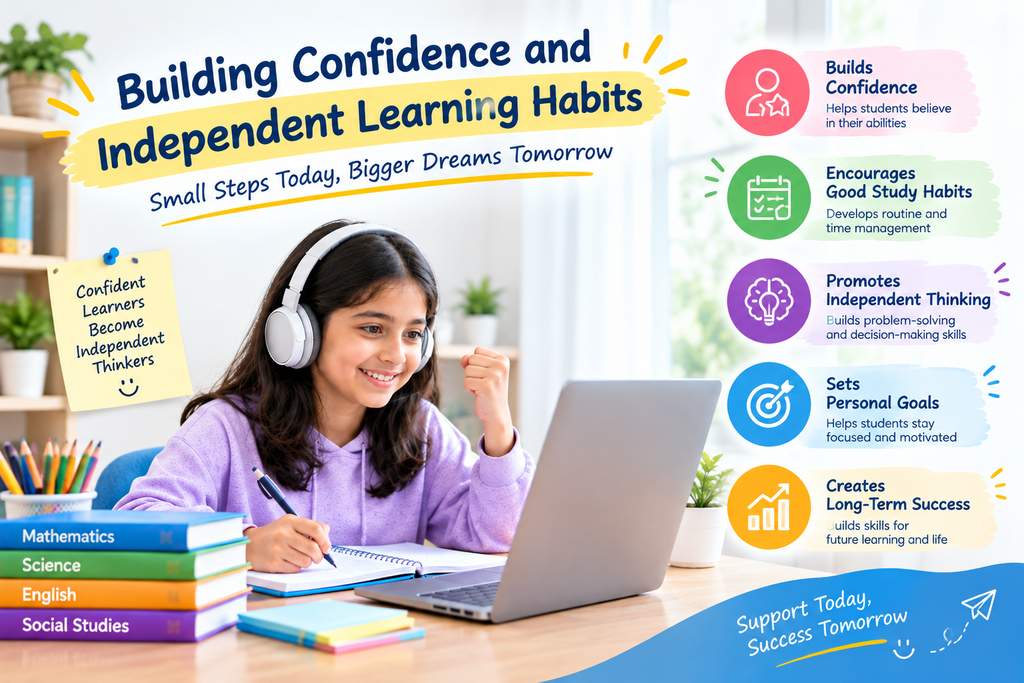
Academic progress is not only about test results. Students also need to learn how to ask questions, organise their work, manage their time, and solve problems independently.
A supportive tutor creates opportunities for students to attempt questions, discuss difficulties, and learn from mistakes without feeling embarrassed. Over time, this can encourage a more positive attitude towards challenging subjects.
Students can also develop practical study habits, such as setting weekly goals, reviewing previous lessons, maintaining organised notes, and completing practice tasks consistently.
The aim should be to help students become more independent learners, not to make them dependent on a tutor for every answer.
8. How to Choose the Right Online Tutor
Parents should consider several factors before selecting an online tutor for an Australian Curriculum student.
Curriculum familiarity: Look for a tutor who understands the student’s year level, subject requirements, and learning objectives.
Subject knowledge: The tutor should be able to explain concepts accurately and answer questions clearly.
Personalised teaching: Lessons should respond to the student’s specific needs rather than follow the same approach for everyone.
Feedback and progress tracking: Regular feedback can help parents and students understand which skills are improving and which areas need more work.
Interactive lessons: A useful online lesson should encourage questions, practice, discussion, and active participation.
Flexible scheduling: Session times should fit the student’s school timetable, homework, rest, and extracurricular activities.
Families comparing the best online tuition class should focus on teaching quality, the suitability of the learning plan, communication, and the child’s comfort with the tutor.
9. How GenieClasses Can Support Personalised Learning
GenieClasses provides an online learning platform where families can explore tutoring support for their child’s academic needs. When considering any tutoring programme, parents should discuss the student’s year level, subjects, learning goals, and current challenges before choosing a suitable learning plan.
To learn more about the platform, visit the GenieClasses homepage. You can also read about the organisation on the About Us page or contact the team through the Contact Us page to ask about available tutoring options.
Parents can also review the GenieClasses FAQ page for additional information.
Frequently Asked Questions
1. What is the Australian Curriculum?
The Australian Curriculum outlines the knowledge, understanding, and skills students are expected to develop across different learning areas. Schools and relevant education authorities use it to guide teaching and learning.
2. Can online tutors help Australian Curriculum students?
Yes. Online tutors can provide additional explanations, subject-specific practice, homework guidance, and revision support. The effectiveness of tutoring depends on the tutor’s suitability, the student’s needs, and the consistency of learning.
3. Which subjects can students study with an online tutor?
Students may seek help with English, Mathematics, Science, Humanities and Social Sciences, Languages, and other subjects. Availability depends on the tutoring provider and the tutor’s expertise.
4. How often should a student attend online tutoring sessions?
The ideal frequency depends on the student’s goals, school workload, and areas requiring support. Some students may benefit from weekly sessions, while others may need more frequent support during particularly challenging topics or assessment periods.
5. How can parents choose a suitable online tutoring programme?
Parents should review the tutor’s subject knowledge, familiarity with the curriculum, teaching approach, communication practices, scheduling options, and progress feedback. A discussion about the child’s learning needs can help determine whether the programme is a good fit.
6. Does online tutoring replace school teaching?
No. Online tutoring is generally intended to complement classroom learning. Students should continue following their school’s lessons, assignments, and assessment requirements.
7. How do I find the best online tuition class for my child?
Start by identifying the subjects and skills your child needs help with. Compare tutors based on their expertise, personalised teaching approach, lesson structure, and ability to provide useful feedback. Choose a programme that supports your child’s learning goals without creating an unmanageable schedule.
Conclusion
Online tutoring can be a valuable source of additional support for students following the Australian Curriculum. Through personalised explanations, subject-specific practice, structured revision, and regular feedback, tutors can help students strengthen their understanding and develop better learning habits.
The most suitable tutoring approach is one that complements classroom teaching, responds to individual needs, and encourages students to become confident and independent learners.
If you are exploring the best online tuition class for your child, begin by identifying their learning goals and finding a tutoring programme that aligns with their schoolwork and academic needs.
Explore GenieClasses to learn more about available online learning support.