Every child learns at a different pace. Some students understand mathematical concepts quickly but struggle with problem-solving, while others may find reading comprehension or scientific reasoning challenging. Sometimes, these difficulties remain unnoticed until they begin affecting school performance.
Technology offers new ways to recognise these challenges earlier. Through online assessments, digital quizzes, learning analytics, and adaptive learning tools, parents and teachers can gain a clearer understanding of a child’s strengths and areas that need improvement.
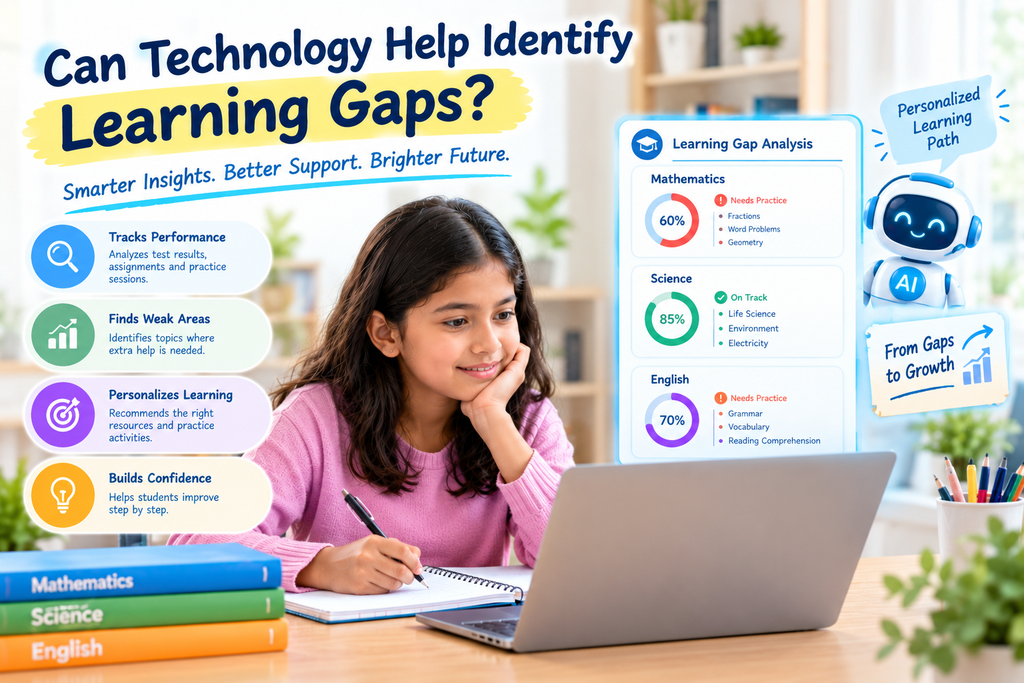
Can Technology Help Identify Learning Gaps? Yes. Educational technology can analyse patterns in students’ answers, assessment results, and learning activities to highlight topics that may require additional attention. However, technology works best when its insights are combined with a teacher’s experience and an understanding of the child’s individual needs.
For parents exploring a best online tuition class, understanding these tools can help them make more informed decisions about their child’s academic support.
What Are Learning Gaps in Education?
Learning gaps are differences between the knowledge or skills a student currently demonstrates and the knowledge or skills expected at their learning stage.
These gaps can develop for several reasons, including missed lessons, unclear explanations, insufficient practice, changes in curriculum, or difficulties understanding foundational concepts.
For example, a student may struggle with algebra because they have not fully understood fractions or basic arithmetic. Similarly, a child experiencing difficulty with essay writing may need additional support with grammar, vocabulary, or sentence structure.
Identifying these underlying issues helps parents and educators focus on the root of the problem rather than repeatedly practising the same difficult questions.
How Can Technology Help Identify Learning Gaps?
Technology provides several practical ways to understand student performance and recognise areas that require additional support.
1. Digital Assessments Reveal Knowledge Gaps
Online quizzes and diagnostic assessments can evaluate a student’s understanding of specific topics. Instead of looking only at the final score, some platforms provide question-level results that reveal recurring mistakes.
For example, a mathematics assessment may show that a student understands multiplication but struggles with fractions. This information helps tutors identify which concepts should be revised first.
Regular assessments also allow educators to compare performance over time and determine whether a student is making progress.
2. Learning Analytics Track Student Progress
Learning analytics involves examining educational data to understand learning patterns. Depending on the platform, this may include quiz results, completed assignments, practice attempts, and time spent on activities.
These insights can help teachers notice patterns that might otherwise be overlooked.
For instance, repeated incorrect answers in one topic may indicate a misconception, while improvement across several assessments may suggest that a teaching strategy is working.
Research on adaptive learning technologies has found positive average effects on learning outcomes among primary and secondary students, although results vary depending on the technology, teaching approach, and learning context. Read the research review.
3. AI-Powered Tools Recommend Personalised Practice
Artificial intelligence can help educational platforms adapt practice questions and learning resources to students’ demonstrated needs.
If a child repeatedly answers questions about a particular concept incorrectly, an adaptive platform may offer simpler examples, additional explanations, or more practice on that topic.
This approach can help students strengthen foundational skills before moving to more advanced material.
However, AI recommendations should not automatically be treated as a complete diagnosis of a student’s abilities. A teacher or tutor should review the results and consider other factors, including confidence, attention, and the way questions are presented.
4. Instant Feedback Helps Students Correct Mistakes
Traditional assessments may leave students waiting for feedback. Digital learning tools can sometimes provide immediate explanations after an answer is submitted.
This allows students to recognise errors, revisit difficult concepts, and practise again while the topic is still fresh in their minds.
Useful feedback should explain why an answer is incorrect and guide the learner towards the correct approach, rather than simply displaying a score.
5. Progress Reports Help Parents Understand Performance
Many online learning platforms provide dashboards or progress reports showing completed lessons, assessment results, and areas that may require further practice.
Parents can use these reports to discuss learning challenges with teachers and tutors. Instead of asking only whether a child has completed homework, they can ask more specific questions about understanding, recurring mistakes, and improvement.
The most useful reports connect performance data with clear next steps.
What Are the Benefits of Identifying Learning Gaps Early?
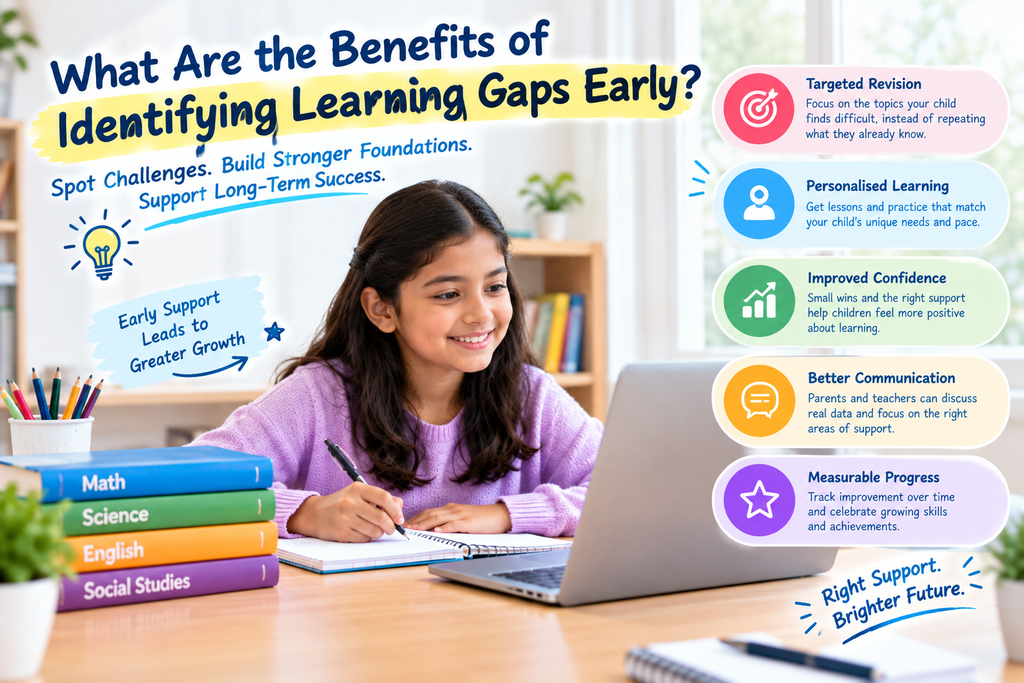
Recognising learning gaps before they become more difficult to address can support a more focused learning experience.
Key benefits include:
- Targeted revision: Students spend more time practising concepts they have not yet mastered.
- Personalised learning: Lessons and exercises can be adjusted to individual needs.
- Improved confidence: Smaller, achievable learning goals can help children feel more comfortable with challenging subjects.
- Better communication: Parents and tutors can discuss specific areas of concern using assessment evidence.
- Measurable progress: Follow-up assessments help show whether additional practice is making a difference.
When families choose the best online tuition class, they should look beyond digital tools and consider whether the teaching approach helps children understand their mistakes and make meaningful progress.
Can Technology Help Identify Learning Gaps? Understanding Its Limitations
Technology can reveal useful patterns, but it cannot explain every reason a child is struggling.
A low quiz score might reflect a misunderstanding, a confusing question, test anxiety, or a temporary lack of concentration. Similarly, spending a long time on an online lesson does not necessarily mean a student has understood it.
Technology may also produce incomplete or misleading insights when the data is limited, the questions are poorly designed, or the platform does not match the student’s curriculum.
Parents should therefore consider these important precautions:
- Treat automated results as indicators, not final judgements.
- Discuss recurring difficulties with a qualified teacher or tutor.
- Check whether digital assessments match the child’s school curriculum.
- Protect children’s personal information and review how learning data is used.
- Balance screen-based learning with discussion, independent practice, and offline activities.
The goal is not to label children according to their performance. It is to understand what support will help them learn more effectively.
How Online Tutoring Can Help Address Learning Gaps
Identifying a learning gap is only the first step. Students also need appropriate guidance, practice, and feedback to improve.
Online tutoring can provide an opportunity to revisit difficult concepts, ask questions, and work through problems at a comfortable pace. One-to-one lessons can be especially useful when a student needs focused attention on specific topics.
At GenieClasses, parents can explore live online learning options, including individual tutoring and group classes, depending on their child’s requirements. Personalised explanations, practice activities, and regular feedback can help tutors address areas that need improvement.
Families looking for the best online tuition class should consider the tutor’s subject knowledge, familiarity with the child’s curriculum, teaching style, and ability to explain difficult concepts clearly.
You can also read our guides on choosing the right online tutor for your child and what parents should expect from a one-on-one online class.
How Can Parents Use Technology to Support Better Learning?
Parents do not need to be technology experts to use learning insights effectively. A few practical steps can make a difference:
- Review assessment results: Look for repeated mistakes rather than focusing only on overall marks.
- Discuss difficulties: Ask your child which topics feel confusing and why.
- Set small learning goals: Focus on one or two specific concepts at a time.
- Arrange targeted practice: Use suitable worksheets, quizzes, and tutor-guided activities.
- Monitor improvement: Revisit the same skills after practice to check understanding.
- Stay connected with educators: Share observations with teachers or tutors to plan appropriate support.
Parents can learn more about GenieClasses through the About Us page or contact the team through the Contact Us page to explore suitable learning options.
Frequently Asked Questions (FAQs)
1. Can Technology Help Identify Learning Gaps?
Yes. Digital assessments, learning analytics, and adaptive learning tools can highlight patterns in student performance and identify topics that may need additional practice. Teachers and tutors should interpret these insights before deciding on the next steps.
2. What Are the Signs of Learning Gaps in Students?
Common signs include repeated mistakes in a particular topic, difficulty applying previously taught concepts, declining assessment performance, and a lack of confidence when approaching certain tasks. These signs should be explored rather than treated as proof of a specific learning difficulty.
3. How Does AI Identify Learning Gaps?
AI-powered educational tools can analyse responses, assessment scores, and other available learning data to detect recurring errors or areas of difficulty. Some systems then recommend additional exercises or alternative explanations.
4. Can Online Assessments Replace Teachers?
No. Online assessments can provide useful information, but teachers and tutors offer context, personal guidance, encouragement, and explanations that automated scores alone cannot provide.
5. How Can Parents Help Children Overcome Learning Gaps?
Parents can discuss difficult topics with their children, review assessment feedback, arrange targeted practice, and communicate with teachers or tutors. Consistent support and achievable learning goals can help children develop confidence.
6. Is Personalised Online Tutoring Useful for Students With Learning Gaps?
It can be useful when lessons are matched to the student’s needs. A tutor can revisit foundational concepts, explain mistakes, and adjust the pace of instruction according to the student’s understanding.
7. What Should Parents Look for in the Best Online Tuition Class?
Parents should consider tutor qualifications, curriculum familiarity, personalised teaching, regular feedback, suitable class formats, and transparent progress updates. Technology can support these features, but teaching quality remains essential.
8. Does Identifying a Learning Gap Mean a Child Is Falling Behind?
Not necessarily. Children develop skills at different rates, and a learning gap simply indicates that a particular concept may need more attention. Early support can help students strengthen their understanding and move forward with greater confidence.
Conclusion
Can Technology Help Identify Learning Gaps? Absolutely. When used thoughtfully, digital assessments, learning analytics, and AI-supported practice can help parents and educators recognise areas where children need additional support.
However, identifying a problem is only the beginning. Students benefit most when technology is combined with patient teaching, personalised practice, constructive feedback, and regular communication between parents and educators.
Choosing the best online tuition class is therefore about more than finding advanced learning tools. It is about finding an educational approach that understands the child, addresses learning needs, and supports steady academic growth.
Explore GenieClasses to learn more about online tutoring options that can support your child’s learning journey.
Learn how GenieClasses supports students through personalised online tutoring and a student-focused teaching approach on our About Us page.
Have questions about online tutoring for your child? Visit our Contact Us page to connect with the GenieClasses team and explore suitable learning options.