
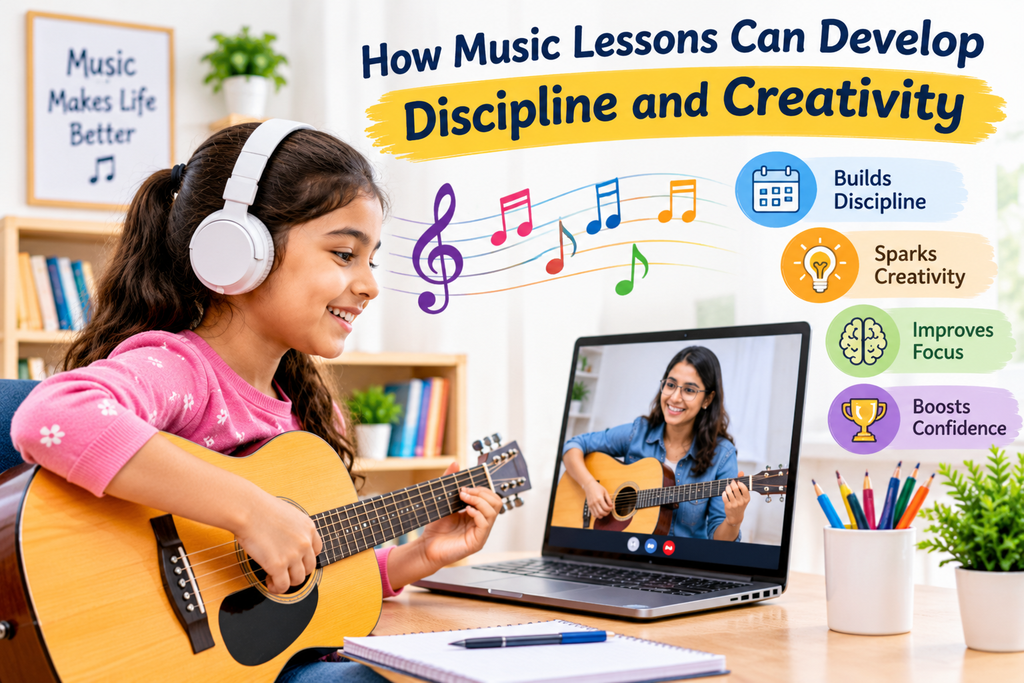
Music is more than an enjoyable activity for children. Learning to sing, play an instrument, or understand different musical patterns can help them develop important life skills. Music encourages children to practise regularly, follow instructions, express emotions, and explore new ideas. Just as online art classes allow students to experiment with colours and designs, music gives children another creative way to express their imagination.
Learning music also introduces children to the importance of patience and consistency. Whether they are practising a simple melody or learning a new instrument, they gradually understand that improvement takes time and effort. With suitable guidance, music education can become a valuable part of a child’s overall learning experience.
Quick Answer: How Do Music Lessons Develop Discipline and Creativity?
Music lessons support children’s development in several ways:
- Encourage regular practice and time management.
- Improve concentration and listening skills.
- Develop creativity through musical expression.
- Build patience and confidence.
- Teach children to set goals and work towards them.
- Encourage collaboration through group performances.
- Help children explore different musical styles and techniques.
These experiences can support both personal growth and creative development.
Key Takeaways
- Regular music practice encourages discipline and consistency.
- Learning instruments helps children develop patience.
- Musical activities provide opportunities for creative expression.
- Performing music can gradually build confidence.
- Group music activities encourage teamwork and communication.
- Music can complement academic learning and other creative subjects.
1. Regular Music Practice Builds Discipline
Discipline is one of the most valuable habits children can develop through music lessons. Learning an instrument or improving singing skills requires regular practice and commitment.
For example, a child learning the piano may need to practise scales, understand notes, and repeat musical exercises before playing a complete song. These activities teach children that consistent effort is important for achieving progress.
Parents can encourage this habit by helping children create a simple practice routine. Even a short, regular practice session can help students become more organised and responsible.
Over time, children may begin applying these habits to homework, school activities, and other responsibilities.
2. Music Encourages Creative Expression
Music gives children an opportunity to express their thoughts and emotions in different ways. They can explore melodies, rhythms, instruments, and musical styles to discover what they enjoy most.
For example, children may create their own rhythms, experiment with simple tunes, or change the way a familiar song is performed.
This freedom encourages imagination and original thinking.
Creative subjects work well together, too. Activities such as online art classes can introduce children to visual expression, while music encourages them to explore sound, rhythm, and emotion. Both experiences give children different ways to communicate their ideas.
3. Learning an Instrument Develops Patience
Learning a musical instrument is a gradual process. Children may find certain notes, chords, or rhythms difficult when they begin.
Instead of expecting immediate results, students learn to repeat exercises, correct mistakes, and improve step by step.
For example, a beginner guitarist may need time to position their fingers correctly before playing a simple song smoothly.
This process teaches patience and helps children understand that mistakes are part of learning. With encouragement and regular practice, they can gradually become more comfortable with challenging tasks.
4. Music Improves Concentration and Listening Skills
Music lessons require children to pay attention to sounds, instructions, timing, and rhythm.
When learning a song, students must listen carefully, remember musical patterns, and follow the correct sequence of notes. These activities encourage focused attention.
Listening skills are also important when children participate in group music activities. They need to notice other performers, maintain rhythm, and coordinate their contribution with the group.
These experiences can support attentive learning habits that are useful in classrooms and everyday situations.
5. Performing Music Builds Confidence
Performing in front of others can help children gradually become more comfortable sharing their abilities.
A student may initially feel nervous about singing or playing an instrument in front of classmates or family members. However, regular opportunities to perform in a supportive environment can help reduce hesitation.
Small achievements, such as completing a song or performing a short musical piece, can give children a sense of accomplishment.
Parents and teachers should appreciate the effort behind each performance rather than focusing only on perfection. Encouragement helps children develop confidence and a positive attitude towards learning.
6. Group Music Activities Teach Teamwork
Music is not always an individual activity. Choirs, bands, and group performances require students to work together.
Children learn to listen to one another, follow shared instructions, maintain timing, and contribute towards a common goal.
For example, when students perform in a small music group, each participant has a role. The overall performance depends on how well everyone coordinates.
These activities can develop communication, cooperation, and respect for others.
7. Music Helps Children Set Goals and Track Progress
Music learning gives children opportunities to set achievable goals.
A beginner may first aim to learn a few basic notes. Later, the goal could be playing a complete song, improving rhythm, or performing confidently.
Breaking larger goals into smaller steps makes learning more manageable.
Parents and teachers can support this process by recognising progress and helping children identify what they want to improve next.
This approach encourages responsibility and helps students understand the value of consistent effort.
8. How Can Parents Support Music Learning at Home?
Parents play an important role in helping children maintain interest in music.
Here are some practical ways to encourage musical development:
- Provide a comfortable space for practice.
- Create a simple and realistic practice schedule.
- Allow children to explore different instruments and music styles.
- Encourage them to listen to different types of music.
- Appreciate improvement instead of expecting perfection.
- Support participation in school performances or group activities.
- Give children enough time to enjoy music without unnecessary pressure.
Parents can also introduce other creative activities, such as drawing, storytelling, and online art classes, to help children explore different forms of expression.
9. How Can Structured Music Learning Help Children?
Structured music learning can provide children with a clear path for developing their skills. Suitable lessons introduce musical concepts gradually and give students opportunities to practise with guidance.
When choosing music education opportunities, parents should consider the child’s age, interests, current abilities, teaching approach, and learning goals.
A supportive learning environment should allow students to ask questions, practise regularly, receive constructive feedback, and develop at a comfortable pace.
GenieClasses provides learning options across different subjects, including creative areas such as Art & Design. Parents can explore the platform to understand its learning approach and available educational options.
Visit the GenieClasses homepage to explore its learning opportunities. You can also learn more about the platform through its About Us page or get in touch through the Contact Us page.
Frequently Asked Questions (FAQs)
1. How do music lessons help children develop discipline?
Music lessons encourage children to practise regularly, follow instructions, manage their time, and work towards specific goals. These habits can support discipline in other areas of life.
2. Can learning music improve creativity?
Yes. Music allows children to experiment with rhythms, melodies, sounds, and different musical styles. These activities encourage imagination and creative expression.
3. At what age should children start learning music?
Children can explore simple musical activities from an early age. The right starting point depends on their interests, attention span, and readiness for structured lessons.
4. Does learning an instrument require daily practice?
Regular practice is helpful, but the ideal routine depends on the child’s age, instrument, and learning goals. Short, consistent sessions can be more manageable for beginners.
5. Can music lessons improve children’s confidence?
Music lessons can help children build confidence by giving them opportunities to learn new skills, complete musical pieces, and perform in supportive environments.
6. What instruments are suitable for beginners?
Common beginner-friendly options include keyboards, piano, ukulele, and some percussion instruments. The best choice depends on the child’s interest, age, and comfort.
7. How can parents encourage children to continue learning music?
Parents can provide encouragement, create a comfortable practice routine, celebrate small improvements, and allow children to explore music they genuinely enjoy.
8. Can music and art activities support overall child development?
Yes. Music and visual art provide different opportunities for creativity and self-expression. Combining activities such as music, drawing, and online art classes can help children explore their interests in different ways.
Conclusion
Music lessons can contribute significantly to a child’s personal and creative development. Through regular practice, children learn discipline, patience, concentration, and responsibility. At the same time, musical activities encourage imagination, self-expression, confidence, and teamwork.
The most important thing is to make learning enjoyable and suitable for each child’s interests. Parents can support this journey by providing encouragement, recognising progress, and allowing children to explore different creative activities.
When children receive the right guidance and opportunities to practise, music can become much more than a hobby. It can help them develop valuable habits and skills that support their growth both inside and outside the classroom.
Encourage your child’s creativity and make learning an enjoyable journey with GenieClasses. Visit GenieClasses or Contact Us to explore available learning options.