
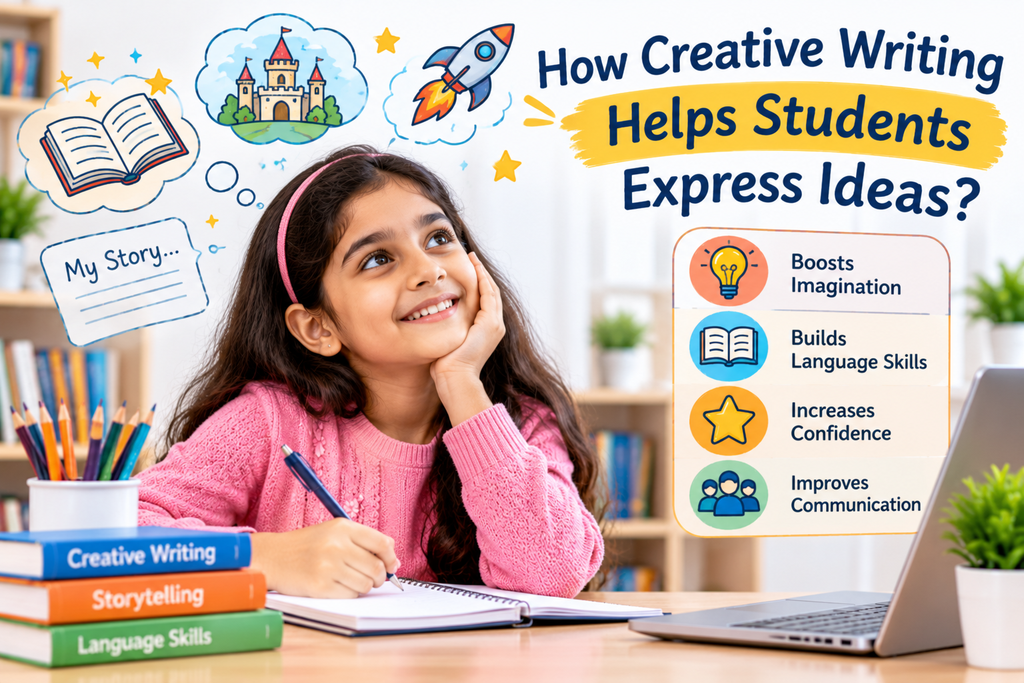
Every child has ideas, thoughts, feelings, and stories they want to share. However, not every student finds it easy to express those ideas clearly. Some children enjoy speaking, while others prefer drawing, storytelling, or writing. Creative writing provides an opportunity for students to explore their imagination and communicate their thoughts through words.
From writing short stories and poems to creating fictional characters, creative writing encourages children to think independently and experiment with language. It also helps them develop vocabulary, improve sentence formation, and become more comfortable expressing their opinions.
Just as activities such as music, drawing, and online art classes encourage creative expression, writing gives students another way to communicate their ideas. With regular practice and supportive guidance, children can gradually become more confident writers and imaginative thinkers.
What Is Creative Writing?
Creative writing is a form of writing that allows students to express their thoughts and imagination in an original way. Unlike writing that mainly focuses on facts or formal answers, it gives children the freedom to develop characters, create stories, describe experiences, and explore different ideas.
Some common forms of creative writing include:
- Short stories: Creating characters, settings, and interesting plots.
- Poetry: Expressing emotions and ideas through rhythm and carefully chosen words.
- Personal narratives: Writing about personal experiences and memorable moments.
- Drama and dialogues: Developing conversations between different characters.
- Descriptive writing: Using words to describe people, places, objects, and situations.
These activities allow students to experiment with language while developing their individual writing styles.
7 Ways Creative Writing Helps Students Express Ideas
1. Encourages Imagination and Original Thinking
Creative writing gives children the freedom to imagine different situations, characters, and possibilities. They can write about magical worlds, exciting adventures, everyday experiences, or completely fictional situations.
For example, a teacher might ask students to write a story beginning with the sentence, “One morning, I discovered a secret door in my classroom.”
Such prompts encourage students to think beyond familiar situations and develop their own storylines.
Activities like storytelling, drawing, and online art classes can also complement writing by helping children explore ideas through different creative approaches.
2. Improves Vocabulary and Language Skills
Writing regularly introduces children to new words, expressions, and sentence structures. As students read stories and experiment with language, they gradually learn how to communicate their thoughts more effectively.
Creative writing encourages students to:
- Learn and use new vocabulary.
- Build meaningful sentences.
- Understand grammar and punctuation.
- Describe situations with greater detail.
- Organise words into clear paragraphs.
These skills can also support their everyday communication and school assignments.
3. Builds Confidence in Self-Expression
Some students hesitate to share their opinions because they worry about making mistakes or being judged. Creative writing offers a comfortable way to express thoughts at their own pace.
When children write about their interests, experiences, or imagined situations, they begin to recognise that their ideas have value.
Teachers and parents can support this process by appreciating original ideas, offering constructive feedback, and encouraging students to keep practising rather than expecting perfect writing from the beginning.
4. Develops Critical Thinking and Problem-Solving
A good story often includes a problem that characters must solve. Students need to decide what happens next, how characters respond, and how the story reaches its conclusion.
For example, if a character loses an important object, the student must think about possible solutions and decide how the situation develops.
This process encourages logical thinking, decision-making, and the ability to consider different possibilities.
5. Helps Children Understand and Express Emotions
Creative writing can provide students with a meaningful way to explore their feelings. Through poems, personal stories, and fictional characters, children can describe happiness, disappointment, excitement, friendship, and other emotions.
Writing about different experiences may help students recognise emotions and communicate them more clearly. However, creative writing should remain a supportive activity rather than a substitute for professional help when a child needs emotional support.
6. Strengthens Communication Skills
Writing is an important part of communication. Students who practise organising their thoughts on paper can also develop skills that help them explain ideas during classroom discussions, presentations, and group activities.
For example, writing a short speech or creating dialogue between two characters encourages children to consider how ideas should be presented to an audience.
Creative activities such as online art classes can also support communication in a different way by encouraging children to explain their visual ideas and creative choices.
7. Encourages Independent Learning
Creative writing allows students to make their own decisions about characters, settings, themes, and story endings. Instead of following only one correct answer, they learn to explore possibilities and take responsibility for their work.
Over time, students can develop the confidence to plan their writing, review their drafts, and make improvements independently.
Creative Writing Activities That Help Students Develop Ideas
Children often learn more comfortably when writing feels interesting rather than repetitive. Parents and teachers can introduce simple activities that encourage imagination and regular practice.
| Creative Writing Activity | Skills Developed |
|---|---|
| Story completion | Imagination and logical thinking |
| Writing short poems | Vocabulary and emotional expression |
| Creating fictional characters | Original thinking and description |
| Picture-based storytelling | Observation and creativity |
| Keeping a daily journal | Reflection and self-expression |
| Writing dialogues | Communication and sentence formation |
For example, showing students an interesting picture and asking them to create a story around it can be a simple way to begin. Children who enjoy visual activities may also find inspiration through drawing, painting, and online art classes.
How Can Parents Encourage Creative Writing at Home?
Parents do not need to be professional writers to help children develop writing habits. A supportive environment and a little regular practice can make a difference.
Here are some practical ways to encourage children:
- Provide interesting topics: Let children write about their favourite activities, animals, places, or imaginary adventures.
- Create a writing routine: Encourage 10–15 minutes of relaxed writing practice.
- Read together: Stories, poems, and age-appropriate books can introduce new vocabulary and writing styles.
- Avoid unnecessary corrections: Focus on the child’s ideas first and discuss improvements gradually.
- Celebrate original ideas: Appreciate creativity instead of comparing children’s work.
- Encourage different creative interests: Combine writing with storytelling, drawing, music, or online art classes when these activities match the child’s interests.
What happens when children are given the freedom to write about something they genuinely enjoy? They often become more interested in practising and sharing their ideas.
Creative Writing vs Other Creative Activities
Creative development does not happen through writing alone. Different activities allow children to explore their imagination and express ideas in different ways.
| Activity | Main Area of Development |
|---|---|
| Creative writing | Language, storytelling, self-expression |
| Drawing and painting | Visual thinking and imagination |
| Music | Rhythm, listening, and emotional expression |
| Drama | Confidence and verbal communication |
| Online art classes | Visual creativity and artistic skills |
| Reading | Vocabulary and understanding |
Parents can introduce a combination of activities based on their child’s interests, age, and schedule. The goal should be to encourage exploration without making extracurricular learning feel like an additional academic burden.
Can Online Learning Support Creative Development?
Online learning can give children access to structured lessons, educational resources, and guided activities from home. When lessons are interactive and suitable for a child’s age, they can provide opportunities to explore different interests.
For example, students can participate in guided writing exercises, storytelling activities, and creative projects. Children interested in visual expression can also explore online art classes to develop artistic skills alongside their writing interests.
At GenieClasses, parents can explore personalized learning support designed around students’ educational needs and learning goals.
To learn more about the platform, visit the About Us page or connect through the Contact Us page.
Frequently Asked Questions
1. At what age should children start creative writing?
Children can begin simple creative writing activities as soon as they develop basic writing skills. Younger children can start with short sentences, picture descriptions, and simple stories. Activities can become more detailed as their language skills develop.
2. How does creative writing improve communication skills?
Creative writing teaches students to organise thoughts, choose appropriate words, and communicate ideas clearly. These abilities can support classroom discussions, presentations, and everyday conversations.
3. What are some easy creative writing topics for students?
Students can write about their favourite holiday, an imaginary adventure, a day without technology, their dream school, or a conversation with their favourite fictional character.
4. How often should students practise creative writing?
A short writing session several times a week can be a useful starting point. Parents can adjust the frequency according to the child’s age, interest, and school schedule.
5. Can creative writing help shy students?
Yes. Writing can provide a comfortable way for shy students to express thoughts without immediately speaking in front of others. Sharing their work gradually may also help them become more confident.
6. Does creative writing help with academic performance?
Creative writing can support vocabulary, grammar, reading comprehension, and the organisation of ideas. These skills may be useful across different school subjects, although academic outcomes depend on several factors.
7. How can parents make creative writing enjoyable?
Parents can introduce storytelling games, picture-based prompts, journals, and interesting writing challenges. Allowing children to choose their topics can also make the experience more enjoyable.
Conclusion
Creative writing is more than an additional school activity. It gives children the opportunity to explore their imagination, communicate emotions, develop language skills, and express ideas in their own unique ways.
With regular practice, encouragement, and constructive feedback, students can become more confident in sharing their thoughts and developing original ideas. Parents and teachers can support this growth by introducing enjoyable writing activities and allowing children the freedom to experiment.
Whether children enjoy storytelling, poetry, drawing, music, or online art classes, providing opportunities for creative exploration can contribute to their overall development. The most important thing is to help every child discover a comfortable and meaningful way to express themselves.
Explore learning opportunities with GenieClasses and encourage your child to develop skills, confidence, and creativity.