
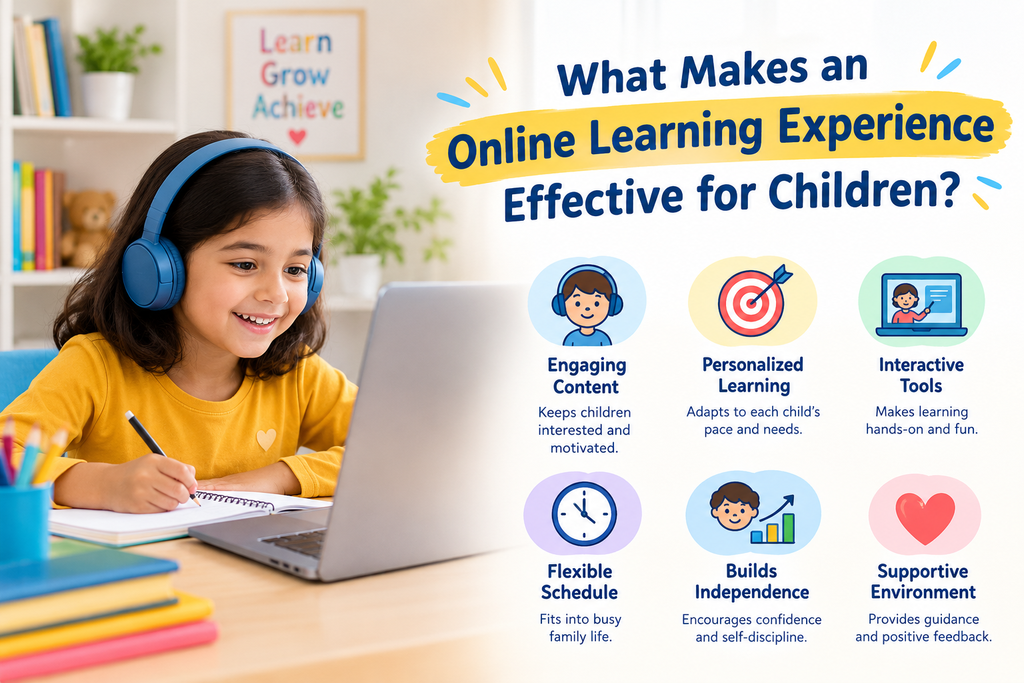
Online learning has become an important part of modern education, giving children access to lessons, educational resources, and personalized academic support from home. However, simply attending online classes does not guarantee better learning outcomes. Children need an engaging, structured, and supportive learning environment that helps them understand concepts, develop confidence, and stay motivated.
An effective online learning experience combines quality teaching, interactive lessons, regular practice, personalized attention, and parental support. Whether a child is studying primary school subjects or preparing for important examinations, the right learning approach can make education more enjoyable and productive.
For parents exploring the best online tuition class, understanding the factors that make online education effective can help them choose a learning environment that matches their child’s academic needs.
1. Personalized Learning Based on Each Child’s Needs
Every child learns differently. Some students understand mathematical concepts quickly, while others need additional examples and practice. Similarly, some children feel comfortable asking questions, whereas others require encouragement to participate.
Effective online learning recognizes these differences and adapts teaching methods to individual learning needs.
A personalized learning experience may include:
- Lessons based on the child’s grade and current academic level.
- Additional explanations for difficult topics.
- Practice exercises based on learning gaps.
- Flexible revision sessions when required.
- Regular feedback to help students improve.
When teachers identify a child’s strengths and weaknesses, they can provide more relevant guidance. This helps students progress at a comfortable pace instead of feeling pressured to keep up with everyone else.
2. Qualified and Supportive Teachers
Teachers play a central role in making online education successful. A good online teacher does more than explain textbook concepts. They encourage curiosity, answer questions patiently, and help children develop independent learning skills.
Parents should look for teachers who demonstrate strong subject knowledge, clear communication, and the ability to explain complicated topics in simple language.
An effective online teacher should also:
- Encourage children to participate in discussions.
- Use practical examples to explain concepts.
- Identify misunderstandings before they become learning gaps.
- Provide constructive feedback.
- Create a comfortable environment for asking questions.
Supportive teaching can help children feel more confident about their abilities and develop a positive attitude toward learning.
3. Interactive Lessons That Keep Children Engaged
One challenge of online education is maintaining a child’s attention in front of a screen. Long lectures with little interaction can make students lose interest, particularly younger learners.
Interactive lessons help solve this problem by involving children directly in the learning process.
Teachers can use quizzes, educational games, visual presentations, diagrams, demonstrations, and real-life examples to make lessons interesting. Asking questions throughout a class also helps teachers understand whether students are following the lesson.
For example, instead of only explaining fractions verbally, a teacher might use pictures of pizzas or chocolates to demonstrate how fractions work in everyday life.
These activities make abstract concepts easier to understand and encourage active participation rather than passive listening.
4. A Structured Routine and Clear Learning Goals
Children benefit from a predictable study routine. When online classes follow a clear structure, students can understand what they are expected to learn and how to prepare for upcoming lessons.
An effective online learning schedule should include live classes, revision, homework, independent study, and breaks.
Parents can support this process by creating a quiet study area and helping children follow a consistent timetable.
Teachers can also establish clear learning objectives at the beginning of each lesson. At the end of the class, students should understand the main concepts covered and know what they need to practise next.
A structured routine improves time management, encourages discipline, and reduces last-minute examination stress.
5. The Right Balance Between Technology and Learning
Technology makes online education convenient, but it should support learning rather than distract from it.
A reliable internet connection, a suitable device, clear audio, and an easy-to-use learning platform can make online classes smoother. Teachers should also ensure that educational tools are appropriate for the child’s age and subject.
However, excessive screen time can cause tiredness and reduce concentration. Parents should encourage short breaks between learning sessions and make time for physical activity, reading printed books, outdoor play, and family interaction.
An effective online learning experience balances digital education with healthy daily habits.
6. Regular Practice and Timely Feedback
Understanding a topic during a live class is only one part of learning. Children also need opportunities to practise what they have learned and apply their knowledge independently.
Regular homework, short assessments, revision exercises, and practice questions help students strengthen their understanding.
Timely feedback is equally important. Instead of simply marking an answer wrong, teachers should explain the mistake and guide the student toward the correct approach.
For example, if a student repeatedly struggles with multiplication, the teacher can revisit the underlying concepts, provide additional examples, and gradually introduce more challenging questions.
This process helps children learn from mistakes and build stronger academic foundations.
7. Parental Involvement Without Excessive Pressure
Parents play an important role in supporting online education, particularly for younger children. Their involvement can help students maintain routines, manage distractions, and develop responsibility.
Parents do not need to supervise every minute of a class. Instead, they can create a supportive environment by checking learning goals, discussing what their child learned, and communicating with teachers when difficulties arise.
Useful ways to support children include:
- Providing a quiet and comfortable study space.
- Helping them follow a consistent timetable.
- Appreciating effort and improvement.
- Reviewing teacher feedback periodically.
- Encouraging questions instead of criticizing mistakes.
Children should gradually learn to manage their own studies. Supportive guidance, rather than constant pressure, helps develop independence and confidence.
8. Tracking Progress and Celebrating Improvement
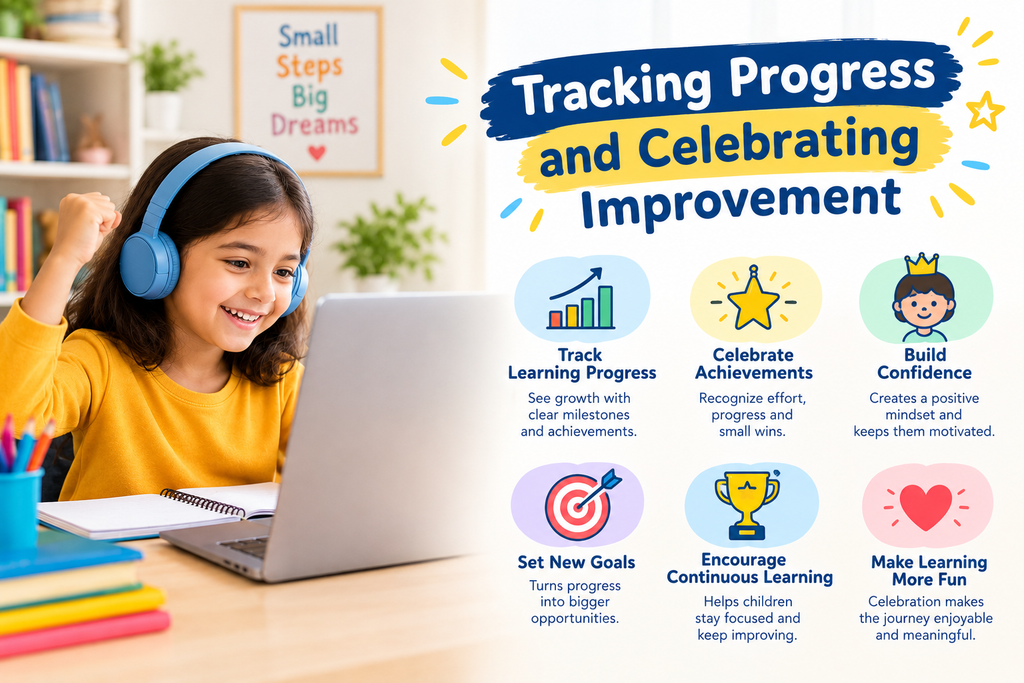
An effective online learning programme should help parents and children understand whether learning goals are being achieved.
Progress can be measured through assessments, completed assignments, classroom participation, improved accuracy, and the ability to explain concepts independently.
Parents should look beyond marks alone. A child who previously avoided mathematics but now attempts problems confidently may be making meaningful progress, even before examination scores improve.
Families searching for the best online tuition class should consider whether the learning programme provides regular progress updates, constructive feedback, and practical guidance for addressing weaknesses.
Clear progress tracking helps teachers adjust lessons and gives children achievable goals to work toward.
9. Choosing an Online Learning Programme That Fits Your Child
Not every online learning programme suits every student. Before choosing one, parents should consider the child’s age, school curriculum, preferred learning style, academic goals, and need for additional support.
Important factors to evaluate include:
- Teacher qualifications and teaching methods.
- Class size and opportunities for individual attention.
- Availability of interactive learning materials.
- Flexibility of class schedules.
- Homework, assessments, and progress reports.
- Communication between teachers and parents.
- Technical support and ease of accessing classes.
Parents can ask for a demonstration class, review the course structure, and discuss expectations before enrolling.
The best online tuition class for a child is one that supports genuine understanding, encourages participation, and provides an appropriate balance of academic guidance and independent learning.
Frequently Asked Questions (FAQs)
1. What makes online learning effective for children?
Online learning becomes effective when it combines qualified teachers, personalized instruction, interactive lessons, regular practice, timely feedback, and a structured study routine. A supportive home environment also helps children concentrate and stay motivated.
2. At what age can children start online learning?
Children can begin age-appropriate online learning during their early school years. Younger learners generally benefit from shorter sessions, visual activities, adult guidance, and frequent breaks. The format should match their developmental needs and attention span.
3. How can parents keep children engaged during online classes?
Parents can help by creating a distraction-free study area, maintaining a regular schedule, encouraging participation, and discussing lessons afterward. Teachers can further improve engagement through quizzes, practical examples, visual materials, and interactive activities.
4. How can parents measure progress in online education?
Parents can review assignments, test results, teacher feedback, classroom participation, and improvements in independent problem-solving. Regular communication with teachers helps identify areas where additional practice may be needed.
5. How do I choose the best online tuition class for my child?
Look for experienced teachers, personalized attention, an appropriate curriculum, interactive lessons, regular assessments, and transparent progress updates. Consider your child’s learning needs and goals before making a decision.
Conclusion
An effective online learning experience goes beyond delivering lessons through a screen. It creates an environment where children can ask questions, practise skills, receive feedback, and develop confidence at their own pace.
Personalized teaching, interactive activities, structured routines, healthy screen habits, and parental support all contribute to meaningful learning outcomes. When these elements work together, online education can become a valuable part of a child’s academic journey.
Parents exploring the best online tuition class should focus on teaching quality, student engagement, and measurable learning progress rather than convenience alone. Choosing a programme that supports individual needs can help children develop stronger academic skills and a lasting interest in learning.
Learn more about Genie Classes: Visit the About Us page to learn more about the platform, or use the Contact Us page to get in touch with the team.