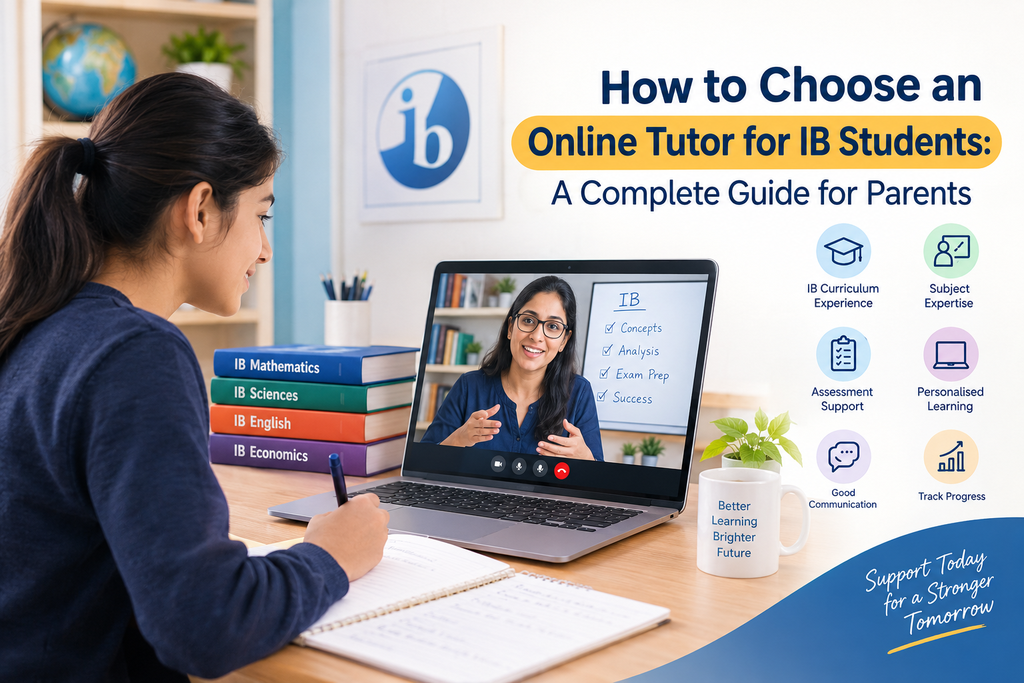
The International Baccalaureate (IB) curriculum encourages students to think critically, explore ideas, conduct research, and apply their knowledge to real-world situations. While this approach helps students develop valuable academic and life skills, it can also present challenges when they need to manage assignments, assessments, projects, and multiple subjects.
Choosing the right online tutor can make this learning journey more manageable. A qualified tutor can help students understand difficult concepts, develop independent learning skills, and prepare confidently for assessments. However, not every tutor is familiar with the expectations of the IB curriculum.
Parents looking for the best online tuition class should focus on subject expertise, familiarity with IB assessment methods, personalised teaching, and the ability to encourage independent thinking. This guide explains the key factors to consider before selecting an online tutor for your child.
1. Look for Experience with the IB Curriculum
The first step is to find a tutor who understands the International Baccalaureate programme. Teaching IB students can require a different approach from teaching students following other curricula.
Depending on the programme and grade level, IB students may need support with conceptual understanding, research, reflective learning, practical investigations, and written analysis.
An experienced IB tutor should understand the requirements of the student’s specific programme, such as the Primary Years Programme (PYP), Middle Years Programme (MYP), or Diploma Programme (DP).
Before choosing a tutor, ask:
- Have you taught students following the IB curriculum?
- Which IB subjects and grade levels do you specialise in?
- How do you help students understand assessment criteria?
- Can you provide examples of how you structure lessons?
A tutor who understands the relevant curriculum can tailor lessons to the student’s actual academic requirements.
2. Check Subject Knowledge and Qualifications
Strong subject knowledge is essential for effective tutoring. Whether your child needs help with Mathematics, Physics, Chemistry, Biology, English, Economics, or another IB subject, the tutor should be comfortable explaining complex topics clearly.
Qualifications are important, but they should not be the only deciding factor. Look for a combination of academic knowledge, relevant teaching experience, communication skills, and the ability to adapt explanations to different learning needs.
For example, an IB Mathematics tutor should be able to explain the reasoning behind a solution rather than simply provide the final answer. Similarly, a tutor supporting IB English should help students develop analytical reading, structured writing, and evidence-based arguments.
Ask prospective tutors how they approach difficult topics and whether they can demonstrate their teaching style during an introductory session.
3. Understand Their Approach to IB Assessments
IB assessments often require students to explain their reasoning, analyse information, interpret evidence, and apply concepts rather than rely only on memorisation.
A suitable tutor should understand how to help students develop these skills while following the relevant subject requirements.
Depending on the subject and programme, tutoring may involve:
- Practising structured and extended-response questions.
- Understanding subject-specific assessment criteria.
- Improving analytical and critical-thinking skills.
- Reviewing mistakes and identifying knowledge gaps.
- Developing effective revision strategies.
For Diploma Programme students, support may also involve understanding the expectations of Internal Assessments (IAs), the Extended Essay (EE), or Theory of Knowledge (TOK).
The tutor should guide students through the learning process without completing assessed work on their behalf. This approach helps learners develop the knowledge, confidence, and academic integrity expected of IB students.
4. Choose Personalised Online Tutoring
Every student learns differently. Some students need help understanding fundamental concepts, while others want to improve exam technique, organise revision, or tackle challenging assignments.
Personalised tutoring allows lessons to focus on these individual needs rather than following a fixed pace for every learner.
When comparing tutoring options, check whether the tutor can:
- Identify the student’s strengths and learning gaps.
- Set clear goals for each lesson.
- Adjust the teaching pace when a topic is difficult.
- Provide relevant practice questions and feedback.
- Review progress regularly with the student and parents.
If you are comparing options for the best online tuition class, prioritise a learning plan that matches your child’s subject requirements, academic goals, and preferred learning style.
You can explore GenieClasses to learn about online tutoring options and find a tutor suited to your child’s learning needs.
5. Evaluate Communication and Teaching Style
A tutor may have excellent academic knowledge but still struggle to explain concepts in a way that students understand.
Effective communication is particularly important for IB learners because they often need to explain their reasoning, defend an argument, and interpret complex information.
During an introductory lesson, observe whether the tutor:
- Explains ideas in clear, student-friendly language.
- Encourages questions and discussion.
- Uses examples to connect theory with practical situations.
- Gives constructive feedback instead of simply pointing out errors.
- Encourages students to solve problems independently.
A supportive tutor should make students comfortable asking questions and acknowledging what they do not understand.
This creates a more productive learning environment and helps students become confident, independent learners.
6. Check Technology and Online Learning Tools
Online tutoring should offer more than a video call. An effective virtual learning environment should make it easy for students to participate, practise, and review what they have learned.
Look for features such as interactive whiteboards, digital worksheets, screen sharing, practice exercises, and access to lesson materials where available.
Ask whether the tutor can share feedback after lessons and recommend additional practice resources. These tools can help students revisit difficult concepts between sessions.
Parents should also consider the reliability of the internet connection, audio and video quality, lesson scheduling, and compatibility with the student’s devices.
If your child has a busy school timetable or participates in activities outside school, flexible scheduling can make it easier to maintain a consistent study routine.
7. Compare Fees, Availability, and Learning Value
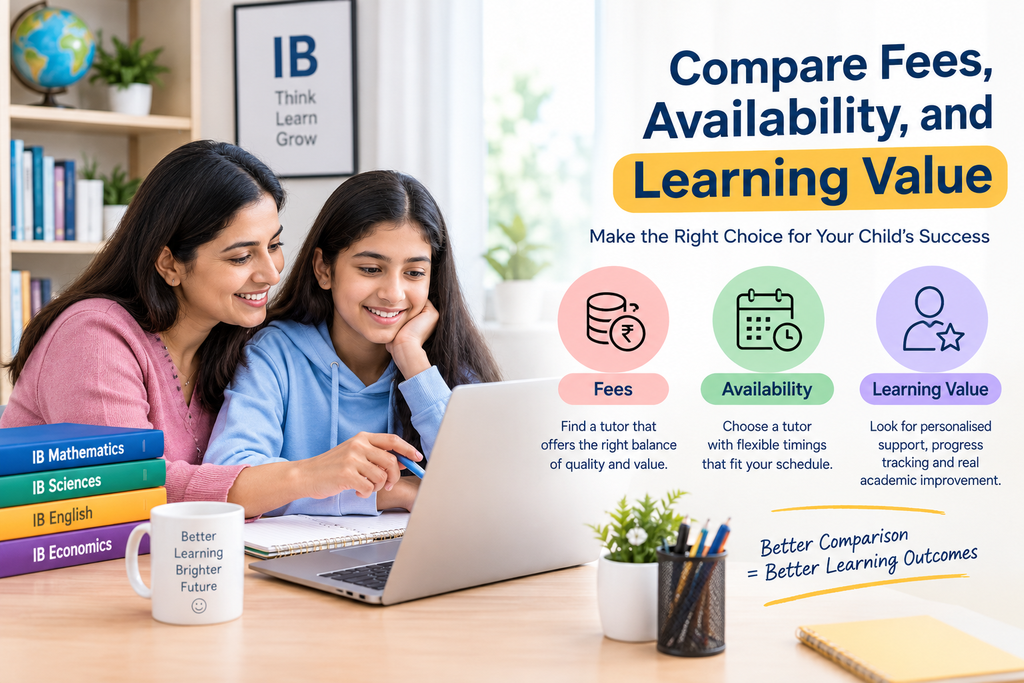
Tutoring fees can vary depending on the subject, tutor qualifications, experience, lesson duration, and level of support offered.
Rather than selecting a tutor based on price alone, compare what is included in the overall learning experience.
Consider the following questions:
- Are lesson fees and cancellation policies clearly explained?
- Is the tutor available at suitable times?
- Are practice materials or progress reviews included?
- Can the student book an introductory or trial session?
- Does the tutor provide feedback on areas requiring improvement?
A more expensive tutor is not automatically a better choice. The goal is to find a suitable balance between teaching quality, affordability, and your child’s academic needs.
For more information about getting started, visit the GenieClasses FAQ page.
8. Use a Trial Lesson Before Making a Decision
A trial lesson is a useful way to understand whether a tutor is the right fit for your child.
During the session, ask the tutor to explain a topic the student finds challenging. Observe whether the explanation is clear, whether the tutor asks questions to check understanding, and whether the student feels comfortable participating.
After the lesson, discuss these points with your child:
- Did the tutor explain the topic clearly?
- Was the lesson interactive and engaging?
- Did the tutor understand the student’s learning needs?
- Does the student feel more confident about the subject?
- Were the next steps explained clearly?
GenieClasses describes a process that includes exploring tutors, booking a free demo, and starting lessons. Parents can use this process to evaluate suitability before committing to ongoing learning. Check the platform for the current availability and terms of demo sessions.
Why Choose Online Tutoring for IB Students?
Online tutoring can offer flexibility, access to different subject specialists, and personalised academic support without the need to travel.
For students balancing school lessons, assignments, extracurricular activities, and revision, online sessions can make it easier to organise a consistent study schedule.
The most effective approach combines expert guidance with independent practice. Students should have opportunities to ask questions during lessons, apply what they have learned, and reflect on feedback afterwards.
Parents should also maintain communication with tutors and encourage students to take responsibility for their own learning.
Conclusion
Choosing an online tutor for an IB student requires more than checking qualifications or comparing prices. Parents should consider curriculum knowledge, subject expertise, assessment support, teaching style, flexibility, and the quality of communication.
The right tutor should help students understand concepts, improve their analytical skills, and approach challenging academic tasks with greater confidence. Regular feedback and a personalised learning plan can also help families monitor progress over time.
If you are searching for the best online tuition class for your child, start by identifying their learning needs, shortlisting suitable tutors, and arranging an introductory session where possible. With the right support, IB students can build stronger academic foundations while developing the independent thinking skills that the curriculum values.
Explore GenieClasses to discover online learning options and take the next step towards a more personalised learning experience.
Frequently Asked Questions (FAQs)
1. How do I choose the right online tutor for an IB student?
Look for a tutor with relevant IB curriculum experience, strong subject knowledge, clear communication skills, and an understanding of the student’s programme and assessment requirements. An introductory lesson can help you evaluate their teaching style.
2. What qualifications should an IB online tutor have?
The ideal tutor should have relevant subject knowledge, appropriate academic qualifications, and experience teaching the required subject and programme. Familiarity with IB assessment criteria and the student’s specific learning needs is also valuable.
3. Is online tutoring effective for IB students?
Online tutoring can be effective when lessons are interactive, personalised, and aligned with the student’s learning goals. Regular practice, constructive feedback, and active participation are important for making progress.
4. Can an online tutor help with IB Diploma Programme subjects?
Yes. A suitable tutor can explain subject concepts, support revision, develop exam techniques, and provide guidance on understanding assessment requirements. Support should encourage independent work and follow IB academic integrity expectations.
5. How often should an IB student attend online tutoring?
The ideal frequency depends on the student’s needs, subject difficulty, upcoming assessments, and existing workload. Some students benefit from weekly sessions, while others may need more frequent support during demanding academic periods.
6. What should parents ask before hiring an IB tutor?
Ask about the tutor’s IB teaching experience, subject specialisation, lesson structure, availability, fees, progress reporting, and approach to assessment preparation. A trial lesson can help determine whether the tutor is a good match.
7. How can I find the best online tuition class for IB subjects?
Compare tutors based on their subject expertise, relevant curriculum experience, personalised teaching approach, feedback methods, scheduling, and fees. Choose a tutor who meets your child’s specific needs rather than relying on price or qualifications alone.
8. Can online tutoring help IB students manage academic pressure?
It can help students organise their learning, clarify difficult concepts, and plan revision more effectively. However, students also need realistic schedules, sufficient rest, and appropriate support from parents and school educators.
To learn more about our teaching approach, educational mission, and commitment to helping students achieve their academic goals, visit our About Us page.
If you have questions about our online tutoring services, need help finding the right tutor for your child, or would like to explore suitable learning options, please visit our Contact Us page to get in touch with our team.