
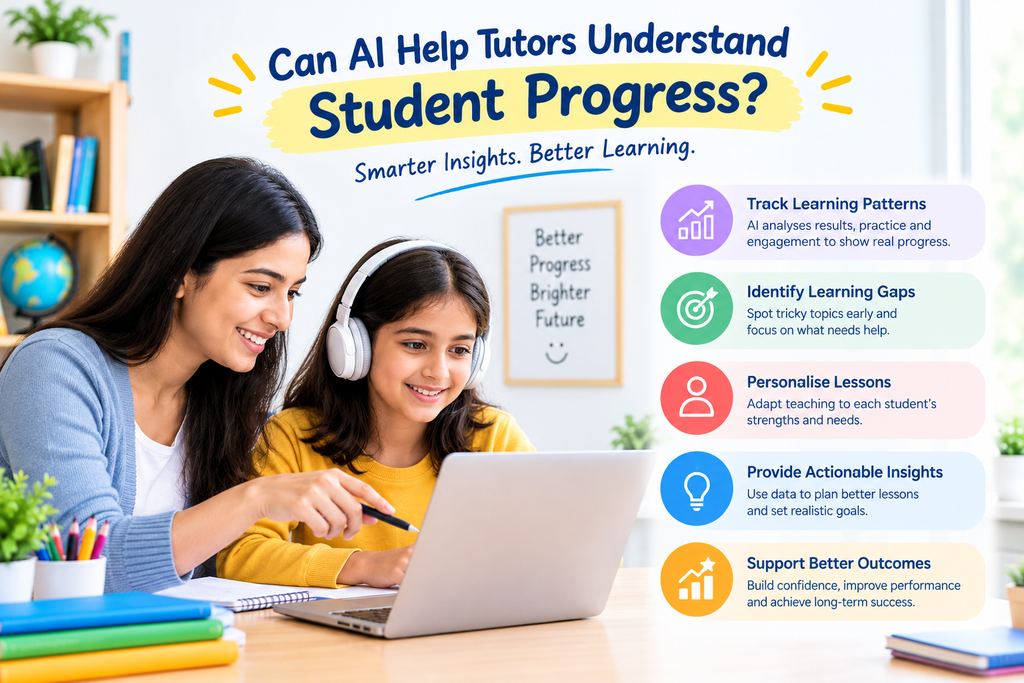
Yes, artificial intelligence (AI) can help tutors understand student progress by analysing learning patterns, quiz results, assignment performance, and recurring mistakes. These insights can help tutors identify strengths, recognise areas that need improvement, and adapt lessons to meet individual learning needs.
For example, if a student consistently struggles with fractions but performs well in geometry, an AI-powered learning tool may highlight fractions as an area requiring additional practice. The tutor can then revisit foundational concepts and monitor the student’s progress in future lessons.
However, AI should support—not replace—a tutor’s professional judgement. Students learn differently, and their progress also depends on confidence, motivation, participation, and the quality of teaching.
For parents exploring the best online tuition class, understanding how technology supports progress tracking can help them choose a learning approach that combines useful insights with personalised human guidance.
How Does AI Help Tutors Track Student Progress?
AI-powered educational tools can organise learning information and identify patterns that may be difficult to notice from individual assignments or tests.
Here are four common ways these tools can support tutors.
1. Analysing Quiz Results and Assignments
AI tools can analyse scores from quizzes, homework, and practice exercises to highlight topics where a student performs well or repeatedly makes mistakes.
For example, a student may achieve strong results in basic algebra but struggle with algebraic equations involving multiple steps. This information can help a tutor decide which concepts need further explanation.
Rather than relying on a single test score, tutors can compare results over time to develop a more complete picture of academic progress.
2. Identifying Learning Gaps
Learning gaps occur when students have not fully understood concepts required for more advanced topics. These gaps can affect performance across several subjects.
AI tools may identify recurring errors and suggest topics for revision. A mathematics tutor, for instance, might discover that difficulty with percentages is connected to an earlier misunderstanding of fractions.
Recognising these patterns helps tutors plan lessons that address the underlying problem instead of focusing only on incorrect answers.
3. Monitoring Improvement Over Time
A student’s progress cannot always be measured through examination marks alone. Improvements in accuracy, problem-solving, consistency, and independent work may also indicate learning development.
Some AI-powered systems present progress through reports or visual dashboards. Tutors can use these records to compare performance across different sessions, identify improvements, and decide whether a learning strategy needs adjustment.
4. Supporting More Personalised Lessons
Students have different learning needs, strengths, and preferred ways of understanding new concepts. AI insights may help tutors choose suitable practice questions, adjust lesson difficulty, and provide additional explanations.
When parents compare the best online tuition class options, they should look for tutors who use progress information to make meaningful changes to lessons rather than simply collecting scores.
Five Benefits of AI-Powered Student Progress Tracking
1. Earlier Identification of Difficulties
AI can highlight repeated mistakes before they become more significant obstacles. If a student regularly struggles with a particular concept, the tutor can investigate the issue and provide timely support.
Early identification is especially helpful when students are preparing for examinations or moving to more advanced topics.
2. More Focused Revision
Students do not always need to spend equal time on every topic. Learning reports can help tutors prioritise concepts that require additional practice while maintaining confidence in areas the student already understands.
For example, an English tutor may focus on sentence structure and grammar if a student’s reading comprehension is strong but written answers remain unclear.
3. Clearer Feedback for Students
Specific feedback gives students a better understanding of what they need to improve. Instead of hearing that they need to work harder, they may receive guidance about the exact skills or concepts requiring attention.
Tutors can use AI-generated observations as a starting point for constructive feedback, explaining mistakes and demonstrating how to solve similar problems independently.
4. Better Communication With Parents
Parents often want to know whether tutoring is helping their child. Progress summaries can provide useful discussion points about completed topics, recurring challenges, and future learning goals.
A tutor can explain which areas have improved, what still needs attention, and how parents can support revision at home.
5. Stronger Study Habits and Learning Goals
When students understand their progress, they can set realistic goals and take greater responsibility for their learning.
A tutor might help a student establish weekly revision targets, practise challenging questions, and review performance after each topic. AI tools can support this process by organising information, while the tutor helps the student remain motivated and consistent.
How Tutors Can Use AI Insights During Online Lessons
AI is most useful when its insights lead to practical teaching decisions. Tutors can incorporate learning information into different stages of a lesson.
- Before a lesson: Review previous quiz results and identify topics that may require revision.
- During a lesson: Use practice responses to recognise misunderstandings and adjust explanations.
- After a lesson: Record completed topics, review errors, and recommend suitable exercises.
- Between lessons: Help students follow a revision plan and prepare questions for their next session.
- During progress reviews: Discuss improvements, remaining challenges, and achievable academic goals.
For example, if a student repeatedly makes mistakes in fractions, the tutor can begin the next session with a short diagnostic exercise. Depending on the results, the tutor may revisit equivalent fractions, demonstrate worked examples, or introduce more challenging questions.
This combination of data and teaching experience can make online tutoring more focused and responsive.
Parents can explore online learning support through the GenieClasses homepage and review the About Us page to learn more about the platform.
Can AI Measure Student Progress Accurately?
AI can provide useful evidence of learning, but it cannot measure every aspect of a student’s development accurately.
A low score may reflect a difficult question, an unfamiliar format, or temporary distraction rather than a lack of understanding. Similarly, completing many exercises does not automatically mean that a student has mastered a subject.
AI-generated reports can also contain errors or overlook context. Tutors should therefore verify important observations through conversations, follow-up questions, independent practice, and appropriate assessments.
Research discussed by the Institute of Education Sciences highlights the importance of teacher involvement when AI tools are used to support learning. Evidence about educational AI is still developing, so results can vary depending on the tool and how it is used.
What Should Parents Consider When Choosing AI-Supported Tutoring?
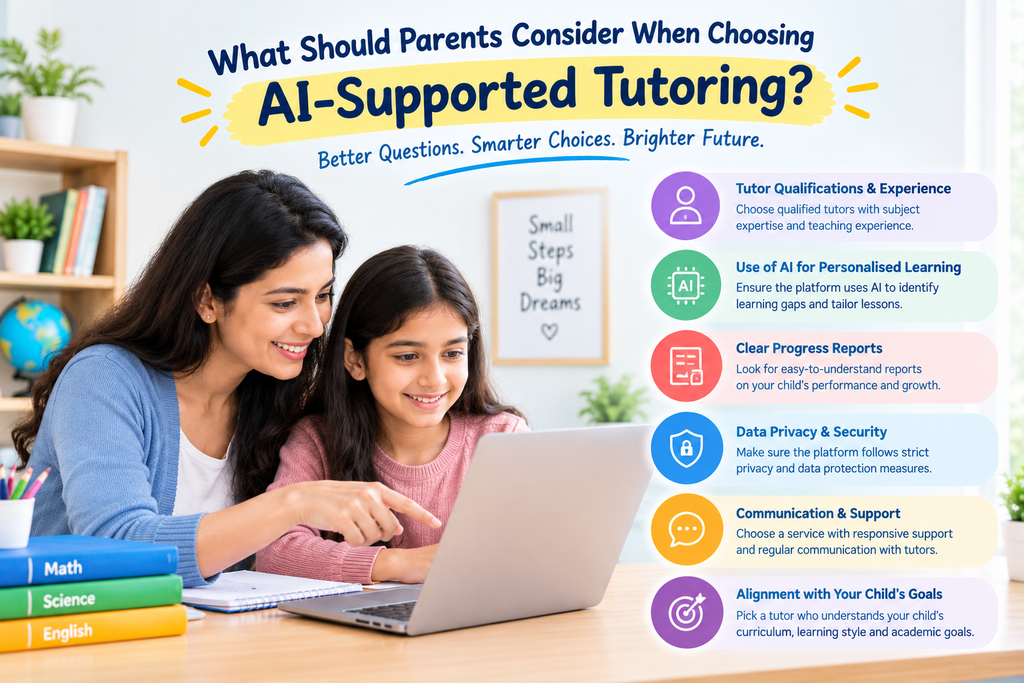
AI features alone do not determine whether a tutoring service is effective. Parents should consider the quality of teaching, the relevance of progress reports, and the way student information is handled.
Before choosing a tutor or platform, ask these questions:
- Does the tutor explain the student’s strengths and learning gaps clearly?
- Are lessons adjusted according to the student’s progress?
- Can parents receive meaningful feedback about learning goals?
- Does the tutor verify AI-generated observations before acting on them?
- Is the technology appropriate for the child’s age and school curriculum?
- Does the platform explain how student data is collected, stored, and used?
Protecting children’s information is also important. Parents should review the platform’s privacy policy and avoid sharing unnecessary personal details with unapproved AI tools.
The best online tuition class should combine effective teaching, clear communication, personalised learning plans, and responsible use of technology.
Frequently Asked Questions
1. Can AI help tutors understand student progress?
Yes. AI tools can analyse quiz results, assignment performance, and recurring errors to identify possible strengths and learning gaps. Tutors should verify these insights before making teaching decisions.
2. How does AI track student performance?
Depending on the platform, AI may analyse assessment scores, practice responses, completed activities, and performance over time. It can then generate reports or recommendations to support lesson planning.
3. Can AI identify a student’s weak subjects?
AI may identify subjects or concepts where a student repeatedly struggles. A tutor can investigate the reasons and develop a suitable learning plan.
4. Does AI replace human tutors?
No. AI can support progress tracking and suggest learning activities, but human tutors provide explanations, encouragement, contextual judgement, and personal interaction that technology cannot fully replace.
5. How can parents monitor their child’s progress through AI?
Parents can review available progress reports with the tutor, discuss improvements and challenges, and agree on practical learning goals. Reports should be considered alongside the child’s confidence, participation, and independent work.
6. Is AI-based student progress tracking always accurate?
No. AI insights depend on the quality of the data and the design of the tool. They may overlook factors such as anxiety, unfamiliar question formats, or temporary distractions, so human review remains important.
7. Is AI useful for online tuition classes?
AI can be useful when it helps tutors identify learning gaps, organise revision, and personalise lessons. Its value depends on how effectively the tutor uses the information to improve teaching.
8. What makes the best online tuition class effective?
The best online tuition class combines subject knowledge, personalised instruction, regular feedback, clear learning goals, and supportive tutor-student communication. AI may enhance this approach when used responsibly.
Conclusion
AI can help tutors understand student progress by identifying learning patterns, highlighting recurring difficulties, and organising information from assessments and practice activities. These insights can support more focused revision, personalised lessons, and clearer conversations with parents.
However, meaningful progress requires more than scores and dashboards. Students also need encouragement, thoughtful explanations, opportunities to practise independently, and tutors who understand their individual needs.
When used responsibly, AI can strengthen the tutoring experience by helping educators make better-informed decisions. Parents should prioritise effective teaching and personalised support while treating AI as a helpful tool rather than a substitute for human judgement.
Explore GenieClasses to learn more about online learning options, visit About Us, or Contact Us to discuss your child’s learning needs.