What Are AI-Powered Learning Insights?
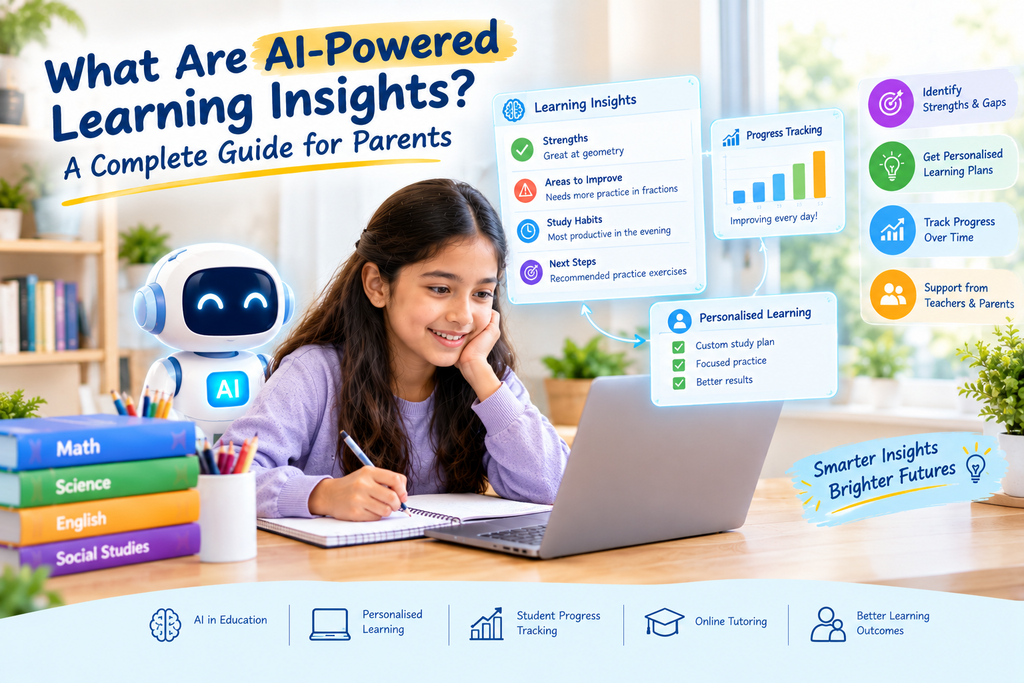
AI-powered learning insights are useful observations generated by artificial intelligence tools that help teachers, tutors, parents, and students understand learning progress. By analysing information such as quiz results, assignment performance, practice patterns, and areas of difficulty, these tools can highlight strengths, identify learning gaps, and suggest ways to improve.
For example, if a student regularly answers algebra questions incorrectly but performs well in geometry, an AI-powered learning tool may identify algebra as an area that needs additional practice. A teacher or tutor can then use this information to plan suitable lessons and provide targeted support.
For families exploring a best online tuition class, understanding AI-powered learning insights can help them evaluate how technology may support personalised learning, meaningful feedback, and academic progress.
How Do AI-Powered Learning Insights Work?
AI-powered learning systems use data from digital educational activities to identify patterns and generate recommendations. The exact process depends on the platform, the information collected, and the technology being used.
Here is how the process commonly works:
1. Collecting Learning Information
Educational platforms may record quiz scores, assignment results, completed activities, time spent on exercises, and answers to practice questions. This information helps build a picture of a student’s learning progress.
2. Identifying Patterns
AI tools analyse available information to identify recurring mistakes, strong subject areas, and topics where a student may need more support. These observations can help teachers recognise patterns that may not be obvious from a single test result.
3. Recommending Learning Activities
Some systems suggest revision exercises, additional explanations, or practice questions based on a student’s performance. These recommendations can help learners focus on specific concepts rather than repeating material they already understand.
4. Monitoring Progress
When learning data is collected over time, educators may be able to compare performance and observe changes. However, progress reports should be reviewed alongside classroom participation, student feedback, and other relevant evidence.
Five Benefits of AI-Powered Learning Insights for Students
1. More Personalised Learning
Every student learns at a different pace. Some understand new concepts quickly, while others benefit from examples, visual explanations, or repeated practice.
AI-powered learning insights can help identify these differences and support more personalised learning plans. Teachers and tutors can use the information to adapt explanations, choose suitable exercises, and focus on the student’s individual needs.
For parents comparing options for the best online tuition class, personalised support and regular feedback are valuable features to consider.
2. Early Identification of Learning Gaps
Small misunderstandings can become bigger problems when students move on to more advanced topics. Learning insights may reveal repeated errors or weak performance in particular areas.
For example, a student who struggles with fractions may later find algebra more difficult. Identifying the underlying gap gives the teacher an opportunity to revisit the basics before introducing more complex concepts.
AI can highlight possible concerns, but a teacher or tutor should confirm whether the student needs additional support.
3. Faster and More Targeted Feedback
Feedback helps students understand what they did correctly and where they need improvement. Some AI-powered tools can provide immediate responses to practice questions, explain common errors, or recommend another exercise.
This allows students to correct mistakes while the topic is still fresh in their minds. For open-ended answers and complex reasoning, human feedback remains especially important because automated systems may misunderstand context or provide inaccurate evaluations.
4. Better Study Habits and Time Management
Learning insights can help students recognise which subjects require more practice and which topics they have already mastered. With this information, students can organise revision sessions more effectively.
For example, a learner preparing for examinations may use performance reports to prioritise weaker topics, schedule practice tests, and review progress each week.
Parents can encourage children to use these insights to develop independent study habits rather than relying entirely on automated recommendations.
5. More Informed Support From Parents and Teachers
Progress reports can help parents and educators discuss a student’s learning needs using specific examples rather than general impressions.
Instead of simply saying that a child is struggling with mathematics, a report may indicate that the difficulty is concentrated in fractions, percentages, or word problems. This can make discussions about revision and extra support more focused.
The best online tuition class should combine useful progress information with clear communication, personalised teaching, and regular opportunities for students to ask questions.
How AI-Powered Learning Insights Support Online Tutoring
Online tutoring platforms may use learning data to make lessons more focused and responsive. When combined with an experienced tutor, these insights can help create a learning plan that reflects the student’s goals and current abilities.
Here are some ways they may support online lessons:
- Targeted revision: Tutors can focus on concepts where a student needs additional practice.
- Lesson planning: Practice results can help tutors choose suitable topics for upcoming sessions.
- Progress discussions: Students and parents can review improvements and identify remaining challenges.
- Flexible learning: Digital resources can provide additional practice between tutoring sessions.
- Goal setting: Students can work towards realistic learning goals and review their progress over time.
At GenieClasses, parents can explore online learning support through the GenieClasses homepage. When comparing tutoring options, look for a balance of subject expertise, personalised teaching, regular feedback, and appropriate use of technology.
Are AI-Powered Learning Insights Always Accurate?
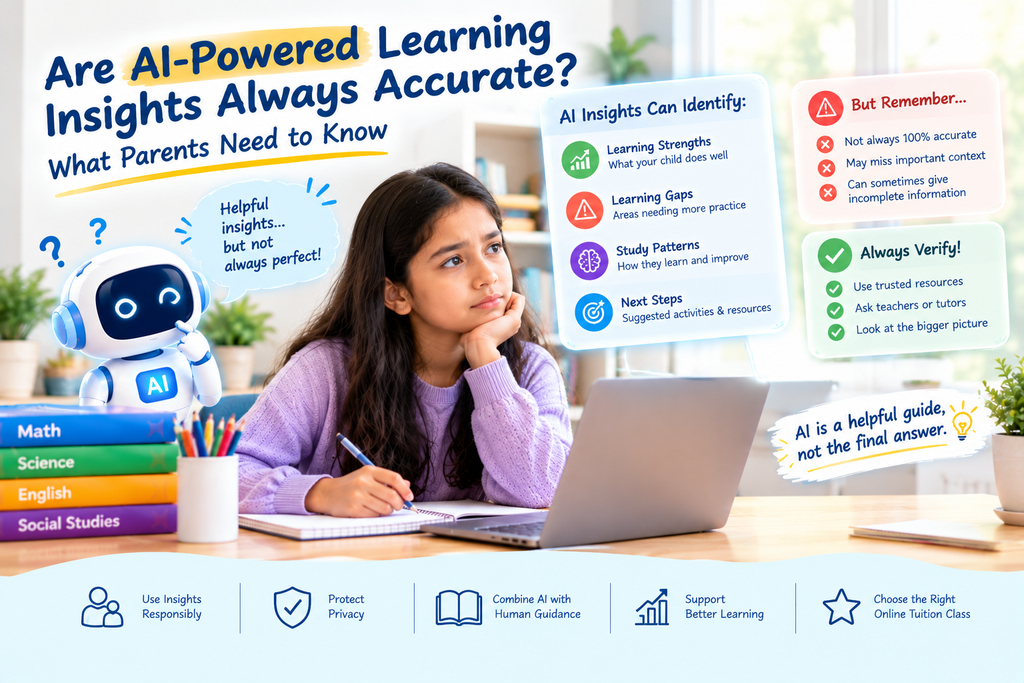
No. AI-powered learning insights are not always accurate or complete. Their usefulness depends on the quality of the data, the design of the educational tool, and how its results are interpreted.
A low quiz score, for example, may reflect a difficult question, a temporary distraction, or a misunderstanding of instructions rather than a long-term learning problem. Similarly, time spent on a lesson does not necessarily indicate how well a student understands the topic.
To use learning insights responsibly:
- Treat AI recommendations as guidance, not final judgments.
- Ask teachers or tutors to review repeated difficulties.
- Consider student confidence, motivation, and classroom performance.
- Check whether recommendations are relevant to the curriculum.
- Protect children’s personal information and review how platforms collect and use data.
Human judgment remains essential to understanding a student’s needs and making educational decisions.
How Parents Can Choose the Right AI-Supported Learning Approach
Parents do not need to choose a tutoring service simply because it advertises artificial intelligence. Instead, consider whether its learning approach genuinely helps the child understand concepts and improve over time.
Before selecting a tutor or platform, ask these questions:
- Does it provide clear explanations of the student’s progress?
- Can the tutor adapt lessons to the child’s learning needs?
- Are practice activities relevant to the student’s school curriculum?
- Is feedback understandable and useful?
- Can parents communicate with the tutor about learning goals?
- Does the platform explain its privacy and data-handling practices?
When choosing the best online tuition class, prioritise teaching quality, student engagement, curriculum alignment, and measurable learning goals. AI features are most useful when they strengthen these fundamentals rather than replace effective teaching.
You can learn more about GenieClasses through the About Us page or contact the team through the Contact Us page to enquire about available learning support.
What Is the Future of AI-Powered Learning Insights?
As educational technology develops, AI tools may offer more detailed ways to understand learning patterns, recommend practice activities, and support teachers with lesson planning. These developments could make it easier to respond to individual learning needs and provide timely assistance.
However, successful learning involves more than data. Curiosity, encouragement, critical thinking, communication, and a supportive relationship with teachers all contribute to a student’s development.
The most effective approach is likely to combine responsible AI tools with experienced educators who can interpret information, motivate students, and help them apply their knowledge.
Frequently Asked Questions
1. What are AI-powered learning insights in simple terms?
AI-powered learning insights are observations generated by AI tools using educational data. They can help identify a student’s strengths, learning gaps, practice patterns, and possible next steps.
2. How does AI help students learn better?
AI can support learning by recommending practice activities, providing immediate feedback on certain exercises, identifying recurring mistakes, and helping students focus on topics that need improvement.
3. Can AI identify a student’s weaknesses?
AI tools can identify patterns that may indicate areas of difficulty. However, teachers and tutors should review these findings before deciding what support a student needs.
4. Are AI-powered learning insights suitable for school students?
They can be useful for school students when tools are age-appropriate, protect personal information, and are used with suitable guidance from parents and educators.
5. Do AI learning tools replace teachers and tutors?
No. AI can assist with practice, feedback, and progress analysis, but teachers and tutors provide human understanding, motivation, contextual explanations, and personalised guidance.
6. How can parents use AI learning reports?
Parents can review reports with their child and tutor, identify topics requiring more practice, set realistic goals, and monitor progress. Reports should be considered alongside other evidence of learning.
7. What should parents look for in AI-supported online tuition?
Look for qualified tutors, personalised lessons, curriculum relevance, clear progress updates, meaningful feedback, strong privacy practices, and opportunities for students to ask questions.
8. Is the best online tuition class one that uses AI?
Not necessarily. The best online tuition class is one that meets the student’s learning needs through effective teaching, personalised support, regular feedback, and appropriate learning resources. AI may add value when it supports these goals.
Conclusion
AI-powered learning insights are helping educators better understand how students learn, where they face difficulties, and which areas may require additional practice. When used responsibly, these insights can support personalised lessons, more focused revision, and constructive conversations between parents, students, and tutors.
However, technology works best when it complements human teaching rather than replacing it. Parents should look for an approach that combines reliable learning information with clear explanations, encouragement, and consistent academic support.
Explore GenieClasses to learn more about online learning options, visit the About Us page to understand the platform, or Contact Us to discuss your child’s learning needs.