
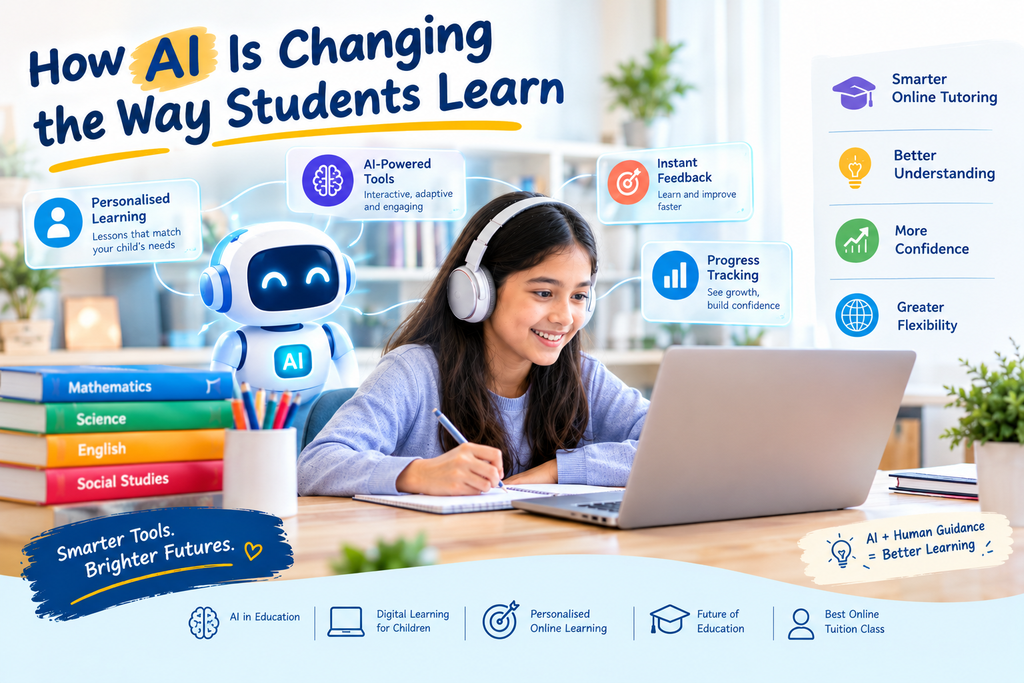
Technology is transforming education, and artificial intelligence (AI) is becoming an important part of how students learn, practise, and understand new concepts. From personalised learning platforms to AI-powered study assistants, modern educational tools are helping students access information, receive feedback, and practise subjects at their own pace.
However, AI is not simply about using technology in the classroom. Its real value lies in helping students understand difficult concepts, identify learning gaps, and develop independent study habits while continuing to benefit from human guidance.
For parents, teachers, and students, understanding these changes is essential. Knowing how to use AI responsibly can help learners make better use of digital resources without becoming overly dependent on automated answers.
In this guide, we explore how AI is changing the way students learn, its major benefits, potential challenges, and how parents can combine technology with effective teaching methods.
Quick Answer: How Is AI Changing the Way Students Learn?
AI is changing education by supporting personalised learning, providing quick feedback, adapting practice activities to students’ needs, and helping learners access explanations in different formats. It can also assist teachers with lesson planning and help identify areas where students may need additional support.
However, AI works best as a learning aid rather than a replacement for teachers. Human educators remain essential for explaining complex ideas, motivating students, correcting misunderstandings, and developing critical thinking skills.
1. Personalised Learning for Every Student
Every child learns differently. Some students understand a concept after one explanation, while others need additional examples, visual demonstrations, or repeated practice.
Traditional classrooms often have limited time to address every individual learning need. AI-powered learning platforms can help bridge this gap by adjusting activities, offering alternative explanations, and suggesting practice questions based on a learner’s responses.
For example, if a student repeatedly makes mistakes in fractions, a learning platform may recommend easier exercises before moving on to more advanced problems.
This approach can help students work at a suitable pace and focus on the topics that require additional attention.
Parents should remember that automated recommendations are not always accurate. A teacher or tutor can review the student’s actual understanding and decide which learning activities are most appropriate.
2. Instant Feedback and Faster Doubt Resolution
One of the most noticeable changes AI brings to education is the ability to provide immediate feedback.
When students practise questions using suitable digital tools, they may receive explanations about incorrect answers, hints for solving problems, or suggestions for reviewing a particular concept.
This can make independent study more productive because students do not always have to wait until their next class to identify a mistake.
For instance, a student practising grammar might receive feedback on sentence structure, while a Mathematics learner may be guided through the steps of an equation.
Nevertheless, AI-generated answers can sometimes be incomplete or incorrect. Students should verify important explanations against textbooks, trusted educational resources, or guidance from their teachers.
3. Making Difficult Subjects Easier to Understand
AI tools can present information in different ways, helping students explore concepts that initially seem difficult.
Depending on the tool, learners may be able to request simpler explanations, examples from everyday life, practice exercises, summaries, or step-by-step guidance.
For example, a Science student learning about the solar system could ask for a simpler explanation of planetary motion. An English student might use an AI-supported tool to practise vocabulary or improve sentence structure.
These tools can be especially useful when students need another explanation after a classroom lesson.
However, the goal should always be understanding rather than simply obtaining an answer. Students should attempt questions independently, explain their reasoning, and practise applying concepts to new situations.
4. Supporting Teachers and Online Tutors
AI is also changing the way educators prepare lessons and support students.
Depending on the tools available, teachers and tutors may use AI to help create practice questions, organise revision materials, develop lesson outlines, or generate examples suited to different ability levels.
This can help educators spend more time reviewing student difficulties and planning meaningful learning activities.
For students attending online lessons, technology can also support digital whiteboards, interactive exercises, shared learning resources, and structured revision sessions.
When parents explore the best online tuition class, they should look beyond whether a service uses AI. The important question is whether technology supports effective teaching, individual attention, and a clear learning plan.
A skilled tutor can use digital tools where appropriate while making sure that the student understands the reasoning behind each answer.
5. Encouraging Independent Learning and Better Study Habits
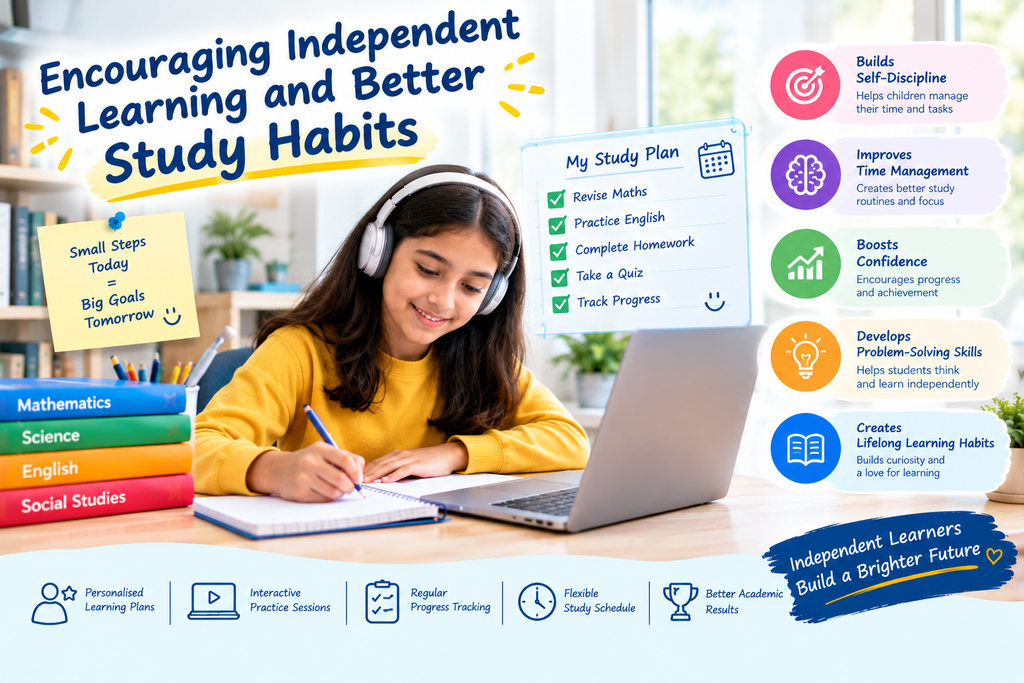
AI can help students become more organised by supporting revision schedules, creating practice quizzes, summarising topics, and breaking large tasks into smaller steps.
For example, a student preparing for an examination might use an appropriate tool to create a revision checklist covering Mathematics, Science, and English.
Students can also use AI to generate practice questions or test their understanding after studying a chapter.
However, AI-generated summaries should not automatically replace school textbooks, prescribed readings, or the original study material. Summaries may omit important details, and generated study plans may not match the school syllabus.
Parents can encourage children to use AI as a study companion by following a few simple habits:
- Attempt homework independently before seeking hints.
- Use AI explanations to understand concepts rather than copy answers.
- Verify facts using reliable sources.
- Write assignments in their own words.
- Review mistakes and explain the correct method.
- Ask a teacher or tutor when an explanation remains confusing.
These habits help students develop responsibility, confidence, and independent problem-solving skills.
6. More Accessible and Flexible Learning Opportunities
Digital learning tools can make educational resources available beyond the traditional classroom. Students may be able to access revision activities, explanations, and practice materials at convenient times, depending on their internet access and the tools available.
Some AI-supported platforms offer features such as text-to-speech, speech recognition, translation, or alternative explanations. These features may help certain learners engage with educational content in ways that suit their needs.
Online learning can also be useful for students who require flexible schedules or additional subject support.
A best online tuition class should combine this flexibility with structured lessons, relevant curriculum coverage, qualified human guidance, and regular progress reviews.
Access to technology alone does not guarantee better learning outcomes. Students still need suitable resources, consistent practice, and support when they encounter difficulties.
7. Understanding the Risks of AI in Education
Although AI offers useful opportunities, parents and students should understand its limitations.
Incorrect or misleading information
AI systems can produce confident-sounding answers that contain errors. Students should cross-check important facts, formulas, and explanations.
Overdependence on automated answers
Copying AI-generated work can prevent students from developing their own reasoning, writing, and problem-solving abilities.
Privacy and data protection
Some educational tools collect information entered by users. Parents should review privacy policies and age requirements, avoid sharing sensitive personal details, and follow school guidelines.
Academic honesty
Students should understand their school’s rules about AI use in homework, projects, and examinations. AI assistance should not be misrepresented as entirely independent work when disclosure is required.
Unequal access to technology
Not every student has reliable internet access or suitable devices. Educational support should consider these differences rather than assume all learners have equal access to AI tools.
Responsible use means teaching students to question, verify, and evaluate AI-generated information instead of accepting every answer automatically.
8. How Parents Can Help Children Use AI Effectively
Parents do not need to be technology experts to support responsible AI use. A few practical steps can make a difference.
Start with a clear learning goal. Decide whether your child needs help understanding a concept, practising questions, or organising revision.
Choose age-appropriate tools. Review tool features, privacy settings, and age restrictions before allowing use.
Encourage active participation. Ask your child to explain an AI-generated answer in their own words.
Keep human guidance involved. Teachers and tutors can check understanding, correct misconceptions, and help students apply knowledge.
Monitor progress. Look for improvements in independent work, confidence, accuracy, and understanding rather than the number of AI tools used.
Maintain a healthy balance. Combine digital learning with reading, writing by hand when useful, classroom participation, practical activities, rest, and face-to-face interaction.
The best online tuition class for a student should support these habits and use technology to strengthen learning rather than replace meaningful teaching.
9. What Does the Future of AI-Powered Education Look Like?
AI is likely to continue influencing educational resources, digital assessments, learning analytics, and personalised study experiences.
Students may increasingly use adaptive practice tools, interactive simulations, and AI-supported feedback to prepare for lessons and examinations. Teachers may also gain more ways to organise resources and identify topics that need further explanation.
At the same time, essential human skills will remain important. Communication, creativity, collaboration, critical thinking, and ethical decision-making cannot be reduced to completing automated exercises.
The most effective learning environments will combine useful technology with skilled teachers, thoughtful curriculum planning, and opportunities for students to learn through discussion, practice, and discovery.
For families, the priority should not be adopting every new AI tool. It should be choosing resources that genuinely help children understand their subjects and become more confident learners.
Frequently Asked Questions
1. How is AI changing the way students learn?
AI is supporting personalised practice, instant feedback, alternative explanations, revision planning, and interactive learning. These features can help students study more efficiently when used with reliable resources and appropriate teacher guidance.
2. Can AI replace teachers and tutors?
No. AI can support certain learning tasks, but teachers and tutors provide human judgement, motivation, personalised explanations, emotional support, and classroom context that automated tools cannot fully replace.
3. What are the main benefits of AI in education?
Potential benefits include personalised learning activities, quicker feedback, flexible access to resources, additional practice opportunities, and assistance with study organisation. The results depend on the quality of the tool and how it is used.
4. Is AI safe for school students?
AI can be useful when used responsibly. Parents should check age restrictions, privacy practices, content suitability, and school policies. Children should avoid sharing sensitive personal information and should verify important answers.
5. Can AI help students prepare for examinations?
Yes. AI tools may help create revision questions, explain concepts, organise study schedules, and provide additional practice. Students should also use their prescribed syllabus, textbooks, past papers where appropriate, and teacher guidance.
6. How can parents prevent children from relying too much on AI?
Encourage children to attempt questions independently, request hints instead of complete answers, verify information, and explain concepts in their own words. Keep AI use aligned with school rules and learning goals.
7. Does AI make online tutoring more effective?
AI may improve online tutoring when it supports relevant practice, feedback, and lesson preparation. Its effectiveness still depends on the tutor’s expertise, the quality of teaching, and how well lessons address the student’s needs.
8. How should parents choose an online tuition service in the age of AI?
Look for subject expertise, curriculum familiarity, personalised lessons, transparent communication, and regular progress updates. AI features can be useful, but they should complement sound teaching rather than serve as the only reason to choose a service.
Conclusion
AI is changing the way students learn by making educational resources more interactive, supporting personalised practice, and helping learners receive feedback more quickly. Used thoughtfully, these capabilities can help children explore difficult concepts, organise revision, and develop independent study habits.
However, technology also brings challenges involving accuracy, privacy, academic honesty, and overdependence. Students need guidance to use AI responsibly and to recognise when they should consult a trusted educational resource or teacher.
For parents choosing the best online tuition class, the priority should be a balanced learning experience that combines effective teaching, individual attention, suitable technology, and regular progress tracking.
Discover how GenieClasses supports students with personalised online learning by visiting our About Us page, or Contact Us to learn more about our tutoring services.