
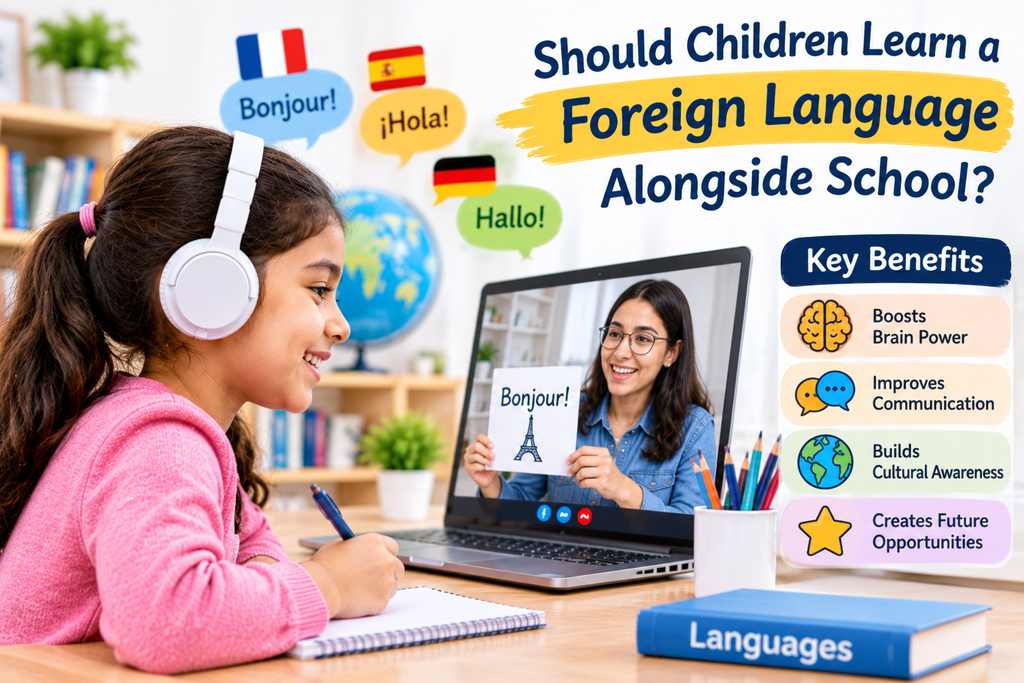
School education helps children develop essential academic knowledge, but learning does not have to stop with regular classroom subjects. Exploring additional skills can help students discover new interests, develop confidence, and prepare for a world where communication and creativity are increasingly important. Learning a foreign language alongside school is one way to make their educational experience more diverse.
Whether a child is interested in French, Spanish, German, Mandarin, or another language, additional language learning can introduce them to new cultures and ways of communicating. It can also encourage curiosity and help them become more comfortable interacting with people from different backgrounds.
Parents often explore different extracurricular opportunities, including music, sports, creative activities, and online art classes, to support their children’s interests. Foreign-language learning can be another valuable addition when it is introduced at a comfortable pace and does not interfere with schoolwork.
Why Should Children Learn a Foreign Language?
Learning another language gives children an opportunity to communicate beyond the language they use every day. It introduces new vocabulary, pronunciation, sentence structures, and cultural expressions.
Children who receive regular exposure and opportunities to practise can gradually become more comfortable understanding and using another language. According to the National Academies of Sciences, Engineering, and Medicine, children have the capacity to learn two languages when they receive adequate exposure and support.
Here are some important reasons parents may consider introducing a foreign language alongside school:
- Better communication: Children learn different ways to express their thoughts and understand others.
- Cultural awareness: They become familiar with traditions, customs, and perspectives from other countries.
- Confidence: Practising conversations can help children become more comfortable speaking in new situations.
- Curiosity: Learning unfamiliar words and expressions can encourage children to explore different cultures.
- Future opportunities: Language skills may be useful for higher education, travel, and certain career paths.
5 Benefits of Foreign Language Learning for School Students
1. Develops Communication Skills
Learning a foreign language encourages children to listen carefully, understand new expressions, and communicate their ideas. Activities such as conversations, storytelling, pronunciation practice, and role-playing make language learning more interactive.
For example, a child learning French might practise introducing themselves, asking simple questions, or describing everyday objects. These small activities gradually improve their ability to communicate.
2. Encourages Flexible Thinking
Learning another language involves understanding different words, sentence patterns, and ways of expressing ideas. Children need to remember vocabulary, recognise patterns, and choose suitable expressions according to the situation.
Some research has identified possible cognitive benefits associated with bilingual language use, including aspects of attention control and flexible thinking. However, these outcomes can vary depending on the child’s language experience and level of proficiency.
3. Builds Cultural Awareness
Language and culture are closely connected. When children learn another language, they may also discover festivals, food, traditions, stories, and everyday lifestyles from different parts of the world.
This exposure can help them appreciate cultural differences and develop a broader understanding of the world.
4. Supports Confidence and Independence
Speaking a new language can feel challenging at first. Children may hesitate when pronouncing unfamiliar words or forming sentences. However, regular practice and positive feedback can help them become more confident.
Parents and tutors can encourage children to practise short conversations without worrying too much about making mistakes. Gradually, students may become more independent in their learning.
5. Creates Opportunities for Future Learning
Foreign-language skills can be useful in many situations, including international education, travel, communication, and professional environments.
Children do not need to become fluent immediately. Building a basic understanding and developing an interest in another language can provide a foundation for continued learning as they grow.
Foreign Language Learning vs Other Extracurricular Activities
Every child has different interests and learning preferences. Some enjoy languages, while others prefer sports, music, technology, or creative activities.
Parents can compare different opportunities before deciding which activities suit their child’s schedule and interests.
| Activity | Skills Children Can Develop |
|---|---|
| Foreign language learning | Communication, vocabulary, cultural awareness |
| Music lessons | Rhythm, listening, discipline |
| Sports | Teamwork, coordination, physical fitness |
| Coding classes | Logical thinking, problem-solving |
| Online art classes | Creativity, visual expression, imagination |
| Creative writing | Vocabulary, storytelling, expression |
The aim is not to make children participate in every activity. Instead, parents should identify opportunities that support their child’s interests without creating unnecessary pressure.
How Can Parents Balance Language Learning With Schoolwork?
One important concern for parents is whether an additional language will make an already busy school routine more difficult. The key is to introduce learning gradually and maintain a realistic schedule.
Consider these practical suggestions:
- Start with short sessions: Begin with 15–20 minutes of practice rather than long lessons.
- Choose an interesting language: Consider your child’s interests, future plans, and motivation.
- Use interactive activities: Songs, flashcards, games, and simple conversations can make practice enjoyable.
- Encourage regular revision: Revisiting previously learned words helps children strengthen their understanding.
- Protect study and rest time: Language learning should complement school education, not replace homework, sleep, or play.
Parents can also combine different enrichment activities according to their child’s interests. For example, a student who enjoys drawing may benefit from online art classes, while another child may prefer language games or music lessons.
How to Choose the Right Foreign Language for Your Child
Choosing a language should depend on the child’s interests, learning goals, and available opportunities. Parents do not need to select a language simply because it is popular.
Here are a few points to consider:
- Personal interest: Ask which language your child would enjoy exploring.
- Learning resources: Check whether suitable teachers, books, applications, and practice materials are available.
- Practical use: Consider whether the language may be useful for travel, education, family connections, or future interests.
- Teaching approach: Look for lessons that include listening, speaking, reading, and writing activities.
- Flexible scheduling: Choose a learning routine that fits comfortably around school responsibilities.
The right learning environment should encourage children to participate, ask questions, and practise without feeling pressured to achieve immediate results.
Can Online Learning Support Children’s Language Development?
Online learning can make additional education more accessible by allowing students to learn from home and follow a flexible schedule. With suitable guidance, children can practise vocabulary, pronunciation, listening, and conversation through digital learning resources.
Parents exploring enrichment options may also consider online art classes or other structured online activities to support different areas of development. The important thing is to select age-appropriate lessons with clear learning goals and meaningful interaction.
At GenieClasses, parents can explore personalized learning support through GenieClasses. The platform focuses on helping students learn with guidance suited to their academic needs and learning goals.
To understand the platform better, visit the About Us page or connect through the Contact Us page.
What If a Child Finds Foreign Language Learning Difficult?
It is normal for children to take time to understand unfamiliar sounds, vocabulary, and grammar. Some may remember words quickly, while others need repeated practice.
Parents can make the process easier by:
- Avoiding comparisons with other children.
- Celebrating small improvements.
- Using picture books and simple videos.
- Practising everyday words through conversations.
- Giving children enough time to understand new concepts.
- Making learning enjoyable rather than treating it as another examination.
Children should also continue developing their strongest language. A good foundation in the language they already know can support their ability to learn additional languages.
Frequently Asked Questions
1. What is the best age for children to start learning a foreign language?
Children can begin exploring another language at different ages. Early exposure can be helpful, but older students can also learn successfully with regular practice and suitable teaching methods.
2. Can learning a foreign language affect school performance?
Foreign-language learning does not automatically reduce academic performance. With a balanced schedule, it can complement school education. Parents should make sure that additional lessons do not interfere with homework, rest, or other important activities.
3. Which foreign language should children learn first?
The best choice depends on a child’s interests, learning goals, and opportunities to practise. French, Spanish, German, Mandarin, and other languages can all be useful depending on the student’s circumstances.
4. How much time should children spend learning a foreign language?
A short, consistent practice routine can be a good starting point. Parents can begin with 15–20 minutes and adjust the schedule according to the child’s age, interest, and school workload.
5. Do children need a tutor to learn another language?
Not always. Books, educational videos, and language-learning applications can provide useful exposure. However, a qualified tutor can offer structured lessons, correct pronunciation, explain grammar, and provide opportunities for conversation.
6. Can children learn a foreign language through online lessons?
Yes. Online lessons can provide access to teachers, interactive resources, and flexible learning schedules. Children benefit most when lessons include regular speaking and listening practice.
7. Should parents encourage more than one extracurricular activity?
Parents can introduce different activities, but they should consider the child’s interests and available time. A balanced routine is more valuable than an overloaded schedule.
Conclusion
Learning a foreign language alongside school can be a meaningful way to expand children’s communication skills, cultural understanding, and learning experiences. It gives them opportunities to explore new ideas and become more confident when interacting with different people.
However, the experience should remain enjoyable and manageable. Parents should consider their child’s interests, school responsibilities, and preferred learning style before choosing an additional activity.
Whether children explore foreign languages, music, sports, technology, or online art classes, the goal should be to encourage curiosity and support their overall development. With consistent practice, suitable guidance, and a balanced routine, additional learning can become a positive part of a child’s educational journey.
Explore personalized learning opportunities with GenieClasses and help your child build skills with the right guidance.