
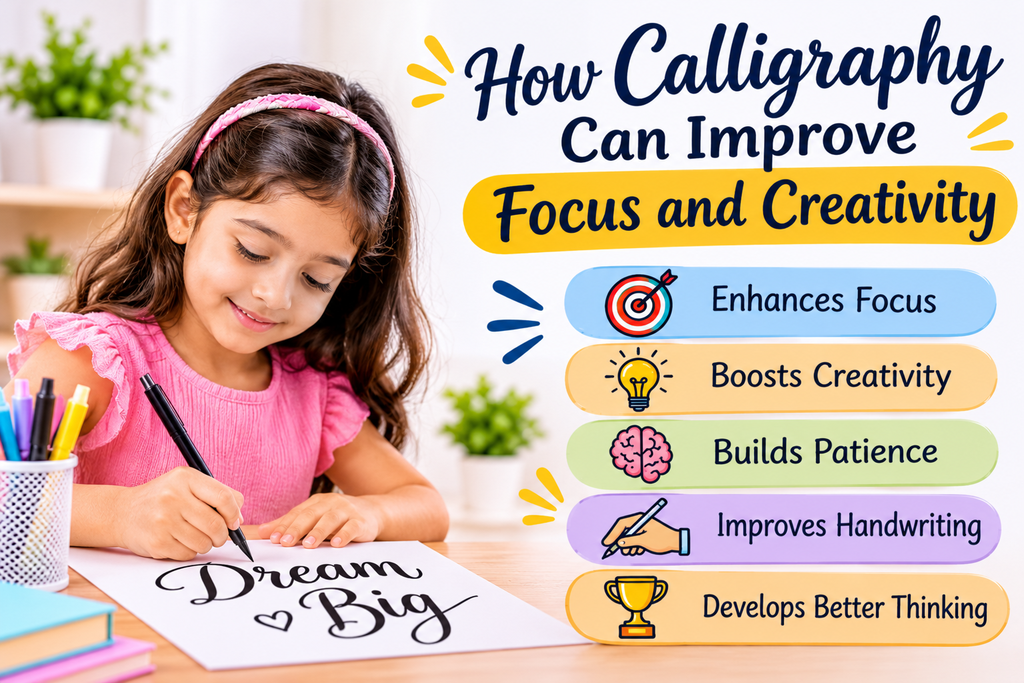
Children learn in different ways, and creative activities can play an important role in their overall development. Along with academic subjects, activities such as drawing, painting, and calligraphy give children opportunities to explore their interests and express their ideas. Calligraphy, the art of creating beautiful letters through different writing techniques, is especially useful because it combines creativity with concentration and patience.
Through online art classes, children can explore different artistic techniques, including decorative lettering and calligraphy. Regular practice can help them develop better control over their hand movements while encouraging them to experiment with shapes, patterns, and styles.
But how can something as simple as writing letters become a meaningful learning activity? Let’s explore how calligraphy can support children’s focus, creativity, and personal development.
What Is Calligraphy and Why Is It Useful for Children?
Calligraphy is the art of decorative handwriting. It involves creating letters using different strokes, shapes, sizes, and spacing techniques. Unlike ordinary handwriting, calligraphy focuses on the appearance and arrangement of letters.
For children, learning calligraphy can be an enjoyable way to develop artistic skills while practising patience and attention to detail. They can begin with simple lettering exercises and gradually move towards more advanced designs.
Calligraphy can also introduce children to the connection between art and language, making learning more interesting and interactive.
7 Ways Calligraphy Can Improve Focus and Creativity
1. Encourages Better Concentration
Calligraphy requires children to pay attention to every stroke, curve, and line. Even a small change in pressure or movement can affect the appearance of a letter.
While practising, children learn to concentrate on one task at a time instead of rushing through an activity. This habit may gradually support better attention during other learning activities.
2. Develops Patience and Discipline
Creating attractive lettering takes time and repeated practice. Children may need several attempts to create a particular shape or complete a design.
This process teaches them that improvement comes through consistent effort. Instead of expecting immediate results, they learn to practise, identify mistakes, and try again.
3. Supports Creative Expression
Calligraphy gives children the freedom to experiment with different lettering styles, colours, patterns, and decorative elements. They can create greeting cards, posters, bookmarks, and personalised artwork.
These activities encourage children to think independently and develop their own artistic ideas. Through online art classes, they can also explore different creative techniques and learn how to turn simple letters into attractive designs.
4. Improves Hand-Eye Coordination
Calligraphy involves carefully coordinating what children see with how they move their hands. They need to follow letter shapes, maintain spacing, and control their writing tools.
Regular practice can help strengthen fine motor control and hand-eye coordination. These abilities are useful for activities such as writing, drawing, colouring, and other classroom tasks.
5. Builds Confidence Through Creative Achievements
Completing a calligraphy design can give children a sense of achievement. As they notice improvements in their lettering, they may feel more confident about their creative abilities.
Parents can encourage this progress by appreciating their effort rather than expecting perfect results. Displaying their artwork at home can also motivate children to continue practising.
6. Encourages Attention to Detail
Calligraphy teaches children to notice small differences in letter shapes, spacing, alignment, and strokes. They gradually understand how these details work together to create a balanced design.
Developing this habit can encourage careful observation and thoughtful work in other creative and academic activities.
7. Provides a Relaxing Creative Activity
Calligraphy can offer children a calm activity away from screens and busy schedules. Focusing on letter formation and repeated strokes may help them slow down and enjoy the creative process.
It can become a positive hobby that allows children to express themselves while taking a break from academic pressure.
How Different Calligraphy Activities Support Children’s Development?
Parents can introduce simple calligraphy activities according to their child’s age, interest, and skill level.
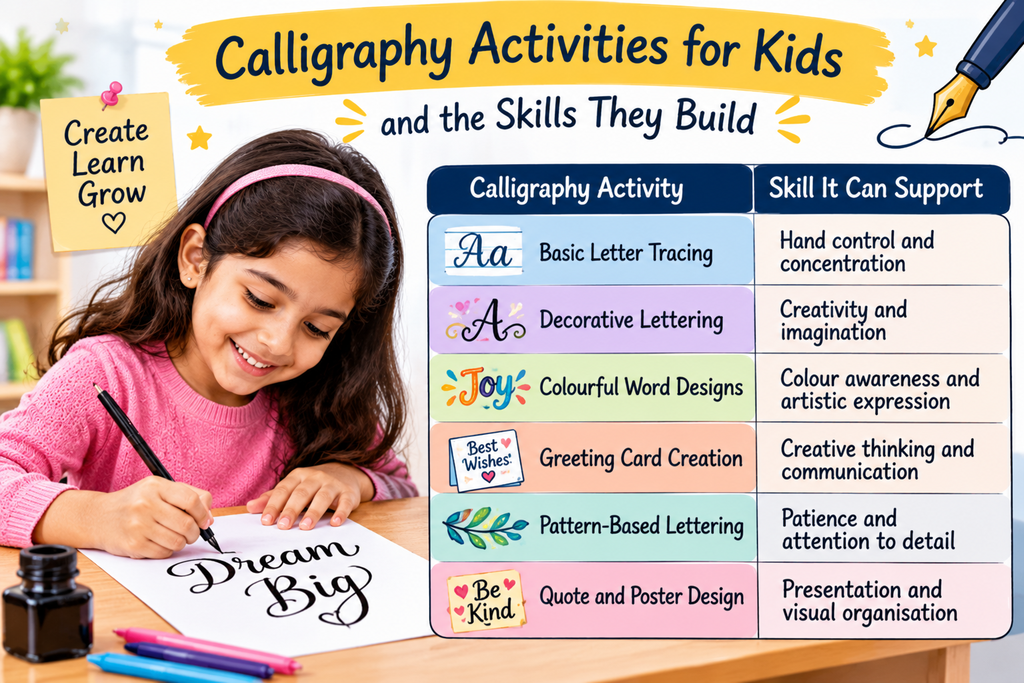
These activities do not require children to master complicated techniques immediately. Starting with simple exercises can make the learning experience enjoyable and manageable.
How Can Parents Encourage Children to Practise Calligraphy?
Parents can support children’s creative development by making calligraphy a regular but enjoyable activity. Here are a few practical suggestions:
- Start with simple exercises: Introduce basic strokes, lines, and letter shapes before moving to complex designs.
- Provide suitable materials: Use age-appropriate pencils, markers, paper, and beginner-friendly calligraphy tools.
- Allow creative freedom: Let children choose colours, lettering styles, and simple projects based on their interests.
- Create a regular practice routine: Short and consistent sessions can help children build skills without feeling overwhelmed.
- Appreciate their progress: Encourage effort and improvement instead of focusing only on perfect lettering.
Parents can also explore online art classes to introduce children to guided creative activities and structured learning opportunities.
The Role of Guided Learning in Developing Artistic Skills
Children may enjoy calligraphy more when they receive guidance and have opportunities to learn new techniques. A structured learning environment can help them understand basic strokes, letter formation, spacing, and decorative styles.
With suitable guidance, children can gradually move from simple lettering exercises to more creative projects. They can also receive feedback that helps them recognise areas for improvement.
At GenieClasses, children can explore creative learning opportunities alongside their academic development. Parents looking for online art classes can consider learning options that encourage artistic exploration, practical activities, and skill development.
The goal should be to make learning enjoyable while allowing children to develop at their own pace.
How Calligraphy Fits Into a Balanced Learning Routine
Creative activities are most beneficial when they are part of a balanced routine. Children need time for schoolwork, hobbies, physical activities, and relaxation.
Parents can introduce calligraphy as a weekly hobby or include short practice sessions in their child’s free time. It does not need to become another academic responsibility.
Combining calligraphy with drawing, painting, music, and other interests can help children explore different forms of creativity. A balanced routine allows them to develop multiple skills while enjoying their childhood.
Frequently Asked Questions (FAQs)
1. At What Age Can Children Start Learning Calligraphy?
Children can begin exploring basic lettering activities when they have sufficient pencil control and an interest in creative writing. Simple tracing and letter-shape exercises are good starting points.
2. Does Calligraphy Help Improve Concentration?
Calligraphy encourages children to pay attention to strokes, shapes, and spacing. Regular practice can help them develop the habit of focusing on a task carefully.
3. Is Calligraphy Difficult for Beginners?
No. Children can start with basic lines, curves, and simple letters. As their confidence and control improve, they can gradually try more detailed lettering styles.
4. Can Calligraphy Improve Children’s Handwriting?
Calligraphy practice can support fine motor control, letter formation, and awareness of spacing. However, decorative calligraphy and everyday handwriting are different skills, so improvement in one does not automatically guarantee improvement in the other.
Conclusion
Calligraphy is more than an artistic writing technique. It gives children an opportunity to practise concentration, patience, hand control, and creative expression. Through simple lettering activities, they can learn to appreciate small details, experiment with artistic ideas, and develop confidence in their abilities.
Parents can introduce calligraphy as an enjoyable hobby and encourage children to explore other creative activities alongside it. With regular practice and appropriate guidance, children can make creative learning a meaningful part of their development.
Explore GenieClasses to discover learning opportunities that support your child’s overall development. Visit our About Us page to learn more about us or Contact Us for further information.