Every student learns differently. Some children understand a concept quickly, while others need additional explanations, practice, or individual attention. For parents and educators, identifying these differences early can make learning more effective and help students work towards their academic goals.
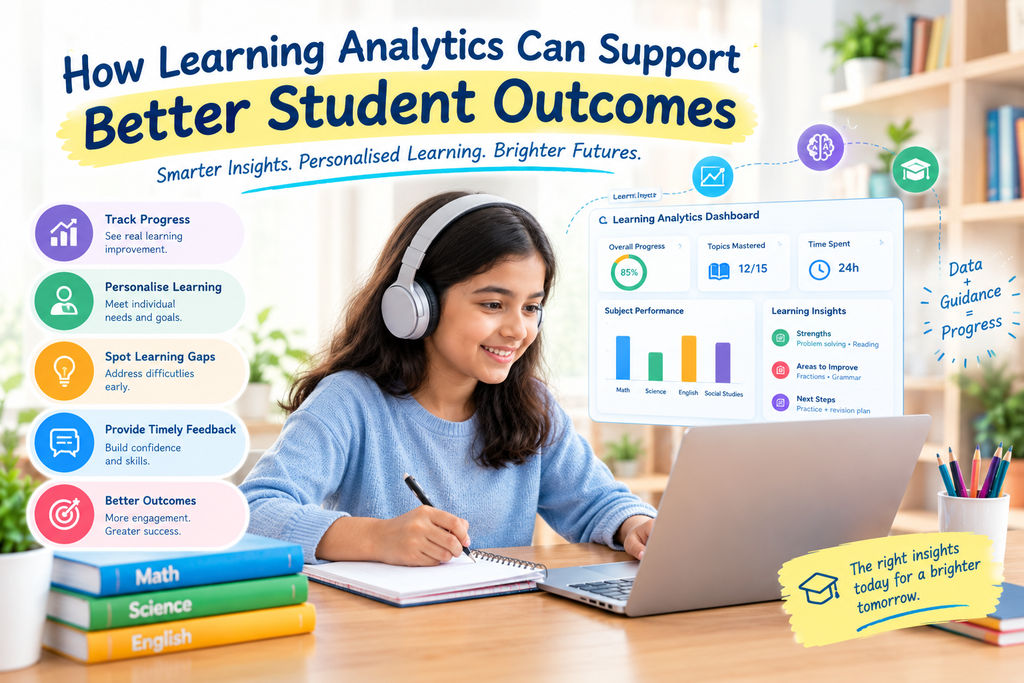
How Learning Analytics Can Support Better Student Outcomes is an important topic in modern education because it explains how information about learning activities and performance can help teachers make informed decisions. Learning analytics uses data such as quiz results, assignment performance, practice patterns, and progress records to identify strengths and areas that need improvement.
When used thoughtfully, these insights can help tutors personalise lessons, provide timely feedback, and guide students towards more effective study habits. For families looking for the best online tuition class, understanding learning analytics can also help them evaluate how a tutoring programme monitors progress and supports individual learning needs.
What Is Learning Analytics in Education?
Learning analytics is the process of collecting, analysing, and interpreting information about students and their learning environments to improve teaching and learning.
For example, an online learning platform may record quiz scores, topics completed, repeated mistakes, and areas where a student needs additional practice. A tutor can review this information to understand which concepts require further explanation.
Learning analytics may include:
- Performance analysis: Reviewing test results, quiz scores, and assignment performance.
- Progress tracking: Monitoring improvement across topics and learning goals.
- Learning pattern identification: Recognising recurring mistakes or areas of difficulty.
- Personalised recommendations: Suggesting suitable revision activities or additional practice.
- Timely support: Helping tutors identify when a student may benefit from extra guidance.
Learning analytics does not automatically explain why a student is struggling. Instead, it provides useful clues that teachers, tutors, and parents can investigate together.
How Learning Analytics Can Support Better Student Outcomes
Learning analytics can make student support more targeted by helping educators understand learning progress and decide what to do next.
1. Identifying Learning Gaps Early
A student may perform well in a subject overall but struggle with a specific concept. For example, a child studying mathematics might solve basic fractions correctly but repeatedly make mistakes when adding fractions with different denominators.
Learning analytics can highlight this recurring pattern. The tutor can then revisit the relevant concept before moving on to more advanced topics.
Early identification helps prevent small misunderstandings from becoming larger learning difficulties. It also allows students to receive support based on their actual needs rather than relying only on their final examination marks.
2. Creating More Personalised Learning Plans
Students have different learning speeds, strengths, and academic goals. A single teaching plan may not suit every child equally well.
By reviewing performance data, tutors can identify topics that require revision and areas where a student is ready for greater challenges. They can then adjust lesson activities, practice questions, and revision schedules.
For example, a student who understands a science concept quickly may move on to application-based questions, while another student may need diagrams, simpler explanations, and guided practice first.
This flexible approach can make learning more relevant and help students use their study time effectively.
3. Providing Timely and Useful Feedback
Feedback is most helpful when students understand what went wrong and how to improve.
Digital quizzes and online assessments can provide quick information about incorrect answers. A tutor can use that information to explain the underlying concept, demonstrate a better method, and give the student another opportunity to practise.
Instead of simply telling a student that an answer is incorrect, effective feedback explains the mistake and encourages independent problem-solving.
4. Encouraging Independent Learning
Learning analytics can help students understand their own progress. When children can see which topics they have completed and which skills need more practice, they can participate more actively in planning their studies.
Students may begin setting small goals, reviewing difficult topics, and checking their understanding before an examination.
However, progress dashboards are most useful when students learn how to interpret them. Tutors and parents should help children focus on improvement and understanding rather than comparing scores with other students.
5. Improving Communication Between Tutors and Parents
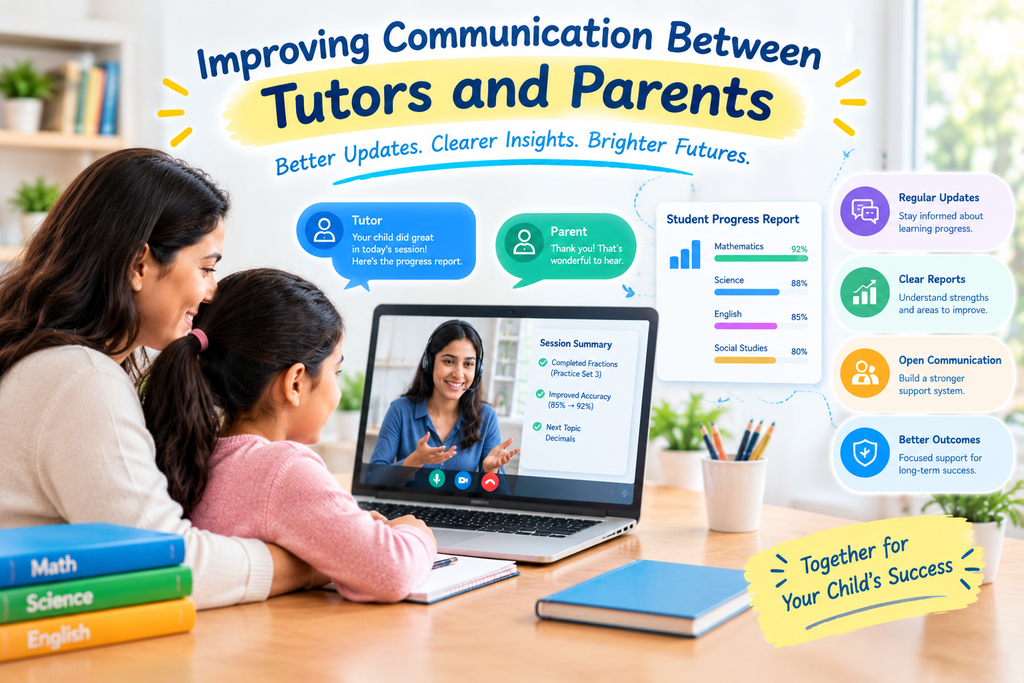
Parents often want to know whether their child is making progress beyond receiving good or poor marks.
Progress reports, session summaries, and topic-level feedback can help explain what a student has learned, where difficulties remain, and what should happen next.
Regular discussions between parents and tutors can turn this information into a practical plan. For example, a tutor might recommend practising multiplication for ten minutes a day or revisiting a particular grammar topic before the next session.
The Role of AI in Learning Analytics
Artificial intelligence can help learning platforms process large amounts of educational information and identify patterns that may be difficult to notice manually.
Depending on the platform, AI-supported tools may summarise lessons, highlight recurring errors, recommend practice activities, or help organise progress information.
However, AI-generated insights are not always accurate or complete. A low quiz score may reflect a difficult question, tiredness, technical problems, or a temporary lack of concentration rather than a lasting learning difficulty.
Human tutors should therefore review these insights alongside classroom performance, student feedback, and their own observations. Technology should support professional judgement, not replace it.
For further context, the OECD’s research on the impact of digital technologies on student learning discusses the potential of data-driven feedback and personalised support, alongside challenges involving privacy, interpretation, and responsible use.
How Parents Can Use Learning Analytics to Support Their Child
Parents do not need to be data experts to use learning insights effectively. A few simple habits can help turn progress information into meaningful action.
Review Progress Regularly
Ask the tutor which concepts the child has mastered and which need more practice. Look for improvement over time rather than judging progress by a single test score.
Focus on Understanding, Not Just Marks
High scores are useful, but students also need to explain concepts in their own words and apply what they have learned to unfamiliar questions.
Set Realistic Learning Goals
Choose achievable goals, such as improving accuracy in fractions, completing a weekly reading activity, or revising two difficult science topics.
Discuss Challenges With the Tutor
If a report shows repeated mistakes, ask the tutor what may be causing them and which teaching strategies could help. Data should encourage useful conversations, not create pressure or blame.
Protect Student Privacy
Parents should understand what information an educational platform collects, why it is needed, who can access it, and how it is protected. Student data should be handled transparently and responsibly.
When comparing the best online tuition class options, look for platforms that combine useful progress information with clear communication, individual attention, and appropriate safeguards for student data.
How GenieClasses Can Support Student Progress
GenieClasses combines online tutoring with learning resources designed to support students throughout their learning journey.
Depending on the learning programme, students can access live one-on-one sessions or group classes, customised worksheets, guided corrections, and class recordings for revision. The platform also offers AI-powered learning insights and concise session summaries that can help learners and families review key learning points.
These resources can support a more organised learning experience by helping students revisit concepts and practise between lessons. Tutors remain important for explaining difficult topics, addressing misunderstandings, and deciding what learning support is appropriate.
Parents can explore the GenieClasses website to learn about its tutoring options. Visit the About Us page to understand the platform’s approach to education, or use the Contact Us page to ask about suitable learning support for your child.
Frequently Asked Questions (FAQs)
1. What is learning analytics in education?
Learning analytics involves collecting and analysing information about student performance, learning activities, and progress. Educators use these insights to identify learning needs and plan suitable support.
2. How can learning analytics improve student outcomes?
It can help tutors identify learning gaps, personalise lessons, provide timely feedback, and monitor progress. Its effectiveness depends on how accurately the information is interpreted and whether appropriate teaching actions follow.
3. What types of student data are used in learning analytics?
Depending on the platform, data may include quiz scores, assignment results, completed activities, recurring mistakes, topic progress, and feedback from learning sessions.
4. Can learning analytics help students who struggle academically?
Yes. It can highlight areas where students may need additional explanations or practice. Tutors can then investigate the reasons for the difficulty and provide appropriate support.
5. What is the role of AI in learning analytics?
AI can help identify patterns, summarise learning information, and suggest practice activities. Its recommendations should be checked by educators because automated insights may be incomplete or inaccurate.
6. How can parents track their child’s learning progress online?
Parents can review tutor feedback, progress summaries, assessment results, and completed topics. Regular conversations with the tutor help explain the information and establish clear next steps.
7. Is learning analytics safe for children?
It can be used responsibly when platforms follow appropriate privacy and security practices. Parents should check what information is collected, how it is used, who can access it, and whether consent is required.
8. What should parents look for in the best online tuition class?
Look for qualified tutors, personalised teaching, clear progress updates, suitable learning resources, regular feedback, and responsible handling of student data. A demo class can help parents assess whether the tutor’s teaching style suits their child.
Conclusion
Learning analytics can help educators move beyond general performance scores and better understand each student’s learning journey. By identifying learning gaps, supporting personalised lessons, providing timely feedback, and encouraging independent study habits, it can make student support more focused and purposeful.
Ultimately, How Learning Analytics Can Support Better Student Outcomes depends not only on collecting data but also on using it wisely. Meaningful progress comes when insights lead to appropriate teaching strategies, consistent practice, and constructive communication between students, tutors, and parents.
For families choosing the best online tuition class, the priority should be a learning environment that combines effective teaching, useful progress insights, and individual attention. Explore GenieClasses to learn more about online learning options that can support your child’s academic goals.
Learn more about our teaching approach on the About Us page. For enquiries or assistance, visit our Contact Us page.