
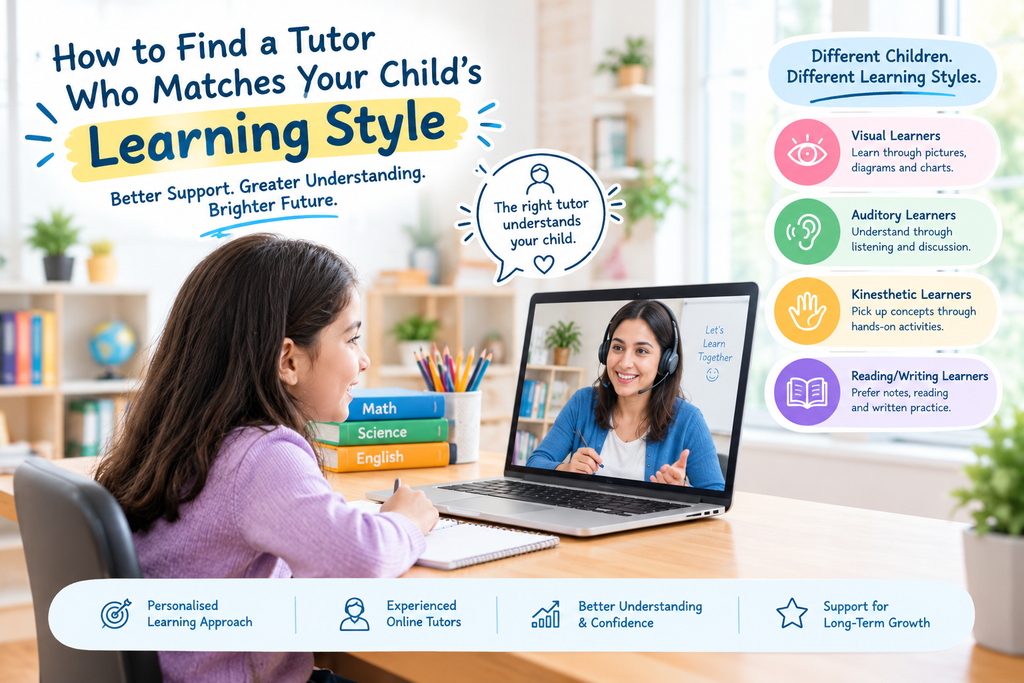
Every child learns differently. Some students understand concepts quickly through pictures and diagrams, while others prefer listening to explanations, asking questions, or practising problems independently. Because of these differences, choosing the right tutor is about more than subject knowledge. It is also about finding someone who understands how your child learns best.
The right teaching approach can help children feel more comfortable asking questions, understand difficult topics, and develop confidence in their abilities. However, identifying a suitable tutor may take time, especially when parents have several options to consider.
In this guide, we explain how to recognise your child’s learning preferences, what qualities to look for in a tutor, and how to decide whether a particular teaching approach is suitable for your child.
Quick Answer: How Do You Find a Tutor Who Matches Your Child’s Learning Style?
To find a suitable tutor, observe how your child understands new concepts, identify the areas where they need support, and look for a teacher who can adapt lessons to their needs. Consider the tutor’s communication skills, teaching methods, patience, subject knowledge, and ability to encourage participation.
A demo class can help you understand whether your child feels comfortable with the tutor and benefits from their explanations.
1. Understand How Your Child Learns Best
Before choosing a tutor, spend some time observing how your child approaches schoolwork and homework.
For example, notice whether your child understands a Mathematics problem more easily after seeing a worked example or prefers solving it step by step with verbal guidance. You can also observe whether they remember information better after discussing it or practising questions.
Some common learning preferences include:
- Visual learning: Understanding information through diagrams, charts, pictures, and written examples.
- Learning through listening: Benefiting from verbal explanations, discussions, and question-and-answer sessions.
- Practical learning: Understanding concepts through activities, demonstrations, experiments, and real-life examples.
- Learning through reading and writing: Preferring written notes, summaries, reading materials, and practice exercises.
These preferences are not fixed categories. A child may benefit from several approaches depending on the subject, topic, or situation. The aim is not to place your child in one category but to understand which teaching methods help them learn more effectively.
2. Identify Your Child’s Academic Strengths and Challenges
A tutor should understand what your child already knows and where they need additional support.
Some students struggle with basic concepts, while others understand lessons but find it difficult to apply their knowledge in examinations. A child may also need help managing homework, improving writing skills, or preparing for a particular curriculum.
Before searching for a tutor, ask yourself:
- Which subjects does my child find challenging?
- Does my child need help understanding concepts or practising questions?
- Do they feel comfortable asking questions in class?
- Do they need a slower pace or more challenging activities?
- What academic goals should tutoring help them achieve?
Clear answers to these questions will make it easier to choose a teacher who can create suitable lessons rather than simply repeat the school syllabus.
3. Look for a Tutor Who Can Adapt Their Teaching Style
A good tutor should be willing to explain a concept in different ways when a student does not understand it the first time.
For example, a Science tutor might use diagrams to explain the human body, while a Mathematics tutor could demonstrate a problem using practical examples before introducing the formula. An English tutor may combine reading, grammar exercises, and writing practice to strengthen different skills.
When evaluating an online tutor, look for someone who:
- Explains difficult concepts in simple language.
- Encourages students to ask questions.
- Uses examples that relate to everyday life.
- Checks understanding before moving to the next topic.
- Adjusts the lesson pace when needed.
- Provides useful feedback and additional practice.
Flexibility matters because a teaching method that works well for one topic may not work equally well for another. A tutor who listens and adapts can help make learning more comfortable and productive.
4. Check the Tutor’s Qualifications and Subject Knowledge
Teaching style is important, but subject expertise should not be overlooked. The tutor should have a strong understanding of the subject and be able to explain concepts accurately.
Parents should review the tutor’s qualifications, teaching experience, familiarity with the relevant curriculum, and experience working with children of a similar age.
For example, if your child follows the IB, IGCSE, CBSE, or another curriculum, look for someone familiar with its learning objectives and assessment requirements.
A qualified teacher who understands your child’s academic needs can help create lessons that balance concept clarity, practice, revision, and examination preparation.
5. Take a Demo Class Before Making a Decision
A tutor’s profile can tell you about their experience, but a demo class helps you understand how they actually teach.
During the session, observe whether the tutor communicates clearly, encourages your child to participate, and responds patiently when they have difficulty understanding a concept.
After the class, ask your child a few simple questions:
- Did you understand the lesson?
- Did the tutor explain things clearly?
- Did you feel comfortable asking questions?
- Which part of the class helped you most?
- Would you feel comfortable learning with this tutor again?
Your child’s feedback is valuable. A student who feels comfortable with their teacher may be more willing to participate and discuss difficulties.
GenieClasses offers a free demo class option so families can experience the teaching approach before proceeding with regular lessons. You can explore GenieClasses to learn more about available learning options.
6. Consider One-on-One and Group Learning
Different children may prefer different classroom environments.
One-on-One Tutoring
Individual sessions allow the tutor to focus on one student’s needs. This can be helpful when a child requires additional explanations, targeted practice, or a flexible learning pace.
Group Classes
Group learning can suit children who enjoy discussions, collaborative activities, and learning alongside other students. It may also give them opportunities to hear different explanations and approaches.
Neither format is automatically better for every child. Consider your child’s confidence, attention, learning goals, and need for individual support before deciding.
GenieClasses provides both one-on-one live sessions and group classes, giving families options to explore based on their learning requirements.
7. Look for Clear Communication and Regular Feedback
A successful tutoring experience involves more than the lesson itself. Parents should also understand what their child is learning, which areas need improvement, and how progress is being monitored.
Look for a tutor who communicates clearly about learning goals, explains mistakes constructively, and suggests practical ways to practise between sessions.
Useful progress indicators may include:
- Better understanding of difficult concepts.
- More confidence when answering questions.
- Improved homework completion.
- Fewer repeated mistakes.
- Greater participation during lessons.
- Progress towards specific academic goals.
Remember that progress can take time. Instead of judging results from a single test, review your child’s development over several weeks and discuss any concerns with the tutor.
8. Choose a Comfortable and Supportive Learning Environment
Children learn more effectively when they feel safe expressing uncertainty and making mistakes. A tutor should be patient, respectful, and encouraging rather than making students feel embarrassed about incorrect answers.
For online learning, also consider practical factors such as internet access, suitable class timings, the learning platform, and access to useful resources.
Before committing to regular sessions, make sure your child can use the technology comfortably and has a quiet place to attend lessons.
Parents can learn more about GenieClasses and its approach to personalised education on the About Us page. For questions about learning options, visit the Contact Us page.
Common Mistakes Parents Should Avoid

When choosing a tutor, try not to make the decision based on only one factor.
Choosing based only on qualifications: Qualifications matter, but the tutor should also communicate clearly and understand your child’s needs.
Assuming every child learns the same way: Children may benefit from different methods depending on the subject and topic.
Ignoring the child’s opinion: Ask your child how they feel about the lessons and whether the explanations are helping.
Expecting immediate improvement: Consistent practice and regular feedback are often needed before meaningful progress becomes clear.
Not reviewing progress: Check whether the lessons are addressing your child’s original learning goals and make adjustments when necessary.
Frequently Asked Questions
1. How do I know which learning style suits my child?
Observe how your child understands new concepts, completes homework, and remembers information. Try different approaches, such as diagrams, verbal explanations, written examples, and practical activities. Their preferences may vary by subject.
2. Why is it important to match a tutor with a child’s learning needs?
A suitable teaching approach can help children understand concepts more clearly, participate actively, and feel more confident asking questions. It can also help the tutor identify areas that need additional practice.
3. What qualities should I look for in an online tutor?
Look for strong subject knowledge, relevant experience, clear communication, patience, flexibility, and the ability to adapt lessons to your child’s needs. A demo class can help you evaluate these qualities.
4. Is one-on-one tutoring suitable for every child?
One-on-one tutoring can be useful for students who need individual attention or a flexible pace. However, children who enjoy collaboration may also benefit from group classes. The best option depends on the child’s goals and preferences.
5. Should I arrange a demo class before choosing a tutor?
Yes, if a demo class is available. It allows you and your child to experience the tutor’s teaching style, communication, and lesson structure before making a longer-term decision.
6. How can I tell if a tutor is helping my child improve?
Look for progress in understanding, participation, confidence, homework, and the ability to solve questions independently. Regular feedback and periodic reviews can help you assess improvement.
7. Can a tutor change their teaching approach if my child struggles?
A flexible tutor should be willing to try another explanation, use different examples, adjust the pace, or provide extra practice when a student is struggling.
8. Where can I find online tutoring options for my child?
You can explore online tutoring platforms such as GenieClasses to review available subjects, browse tutors, and consider a demo class before selecting a suitable learning option.
Final Thoughts
Finding a tutor who matches your child’s learning style starts with understanding their needs rather than looking for a one-size-fits-all solution. Pay attention to how your child learns, identify their academic challenges, and choose a teacher who combines subject knowledge with patience, flexibility, and clear communication.
A demo class is a practical way to see whether the tutor’s approach works for your child. Once lessons begin, keep communication open, review progress regularly, and make changes when needed.
The right support can help children build stronger understanding, develop independent study habits, and become more confident learners. Take time to compare suitable options and choose a learning approach that supports your child’s long-term growth.