
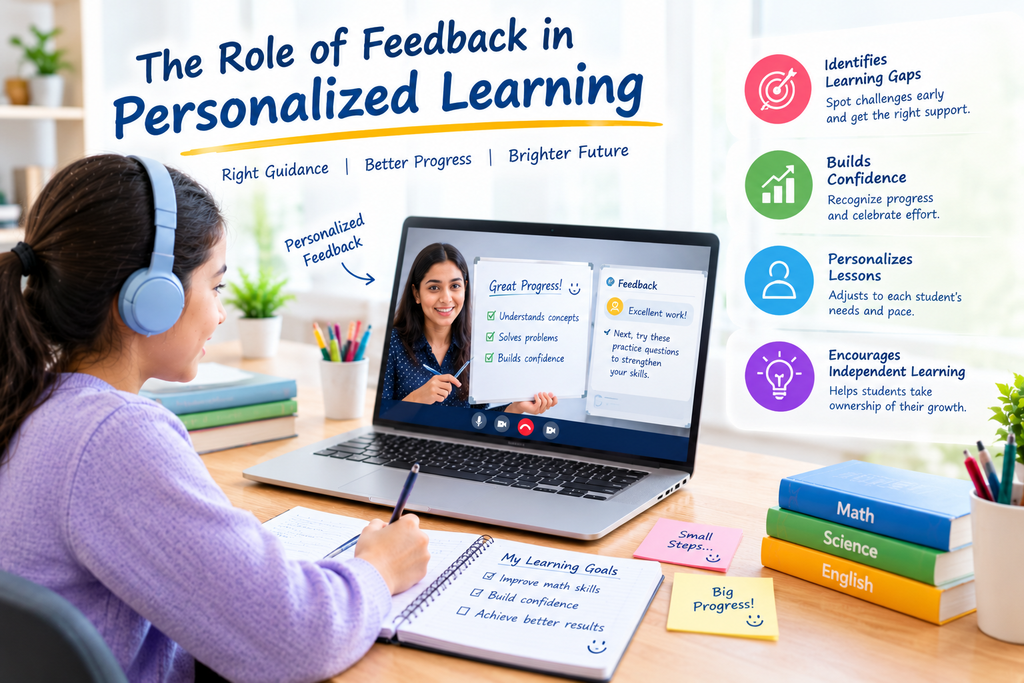
Every student has a different learning style, pace, and level of understanding. While some students grasp new concepts quickly, others need additional explanations and practice. Personalized learning helps address these differences by providing students with support that matches their individual needs. One of the most important parts of this approach is regular and constructive feedback.
Feedback helps students understand what they are doing well, where they need improvement, and how they can achieve their academic goals. A skilled online tutor can use feedback to identify learning gaps, explain difficult concepts, and adjust lessons according to a student’s progress. Instead of focusing only on marks, feedback encourages continuous improvement and helps students become more confident learners.
What Is Feedback in Personalized Learning?
Feedback in personalized learning refers to the guidance students receive about their understanding, performance, and progress. It explains their strengths, highlights areas that need improvement, and provides practical steps to help them learn more effectively.
For example, if a student repeatedly makes mistakes in mathematics, simply marking an answer incorrect may not be enough. Constructive feedback explains why the answer is incorrect, demonstrates the correct method, and gives the student an opportunity to practise similar questions.
This approach makes learning more meaningful because students understand their mistakes instead of simply memorizing the correct answers.
1. Feedback Helps Identify Learning Gaps
Learning gaps occur when students have not fully understood a concept or developed a particular skill. These gaps can affect their performance in future lessons, particularly when advanced topics depend on earlier knowledge.
Regular feedback helps teachers identify these difficulties before they become larger problems. For instance, a student struggling with algebra may need to revise basic arithmetic or understand mathematical operations more clearly.
Teachers can review answers, ask questions, and observe how students approach different problems. Once the underlying difficulty is identified, they can provide additional explanations, practice exercises, and targeted learning activities.
Early feedback allows students to strengthen their foundations and progress with greater confidence.
2. Constructive Feedback Builds Student Confidence
Students may feel discouraged when they make mistakes or receive lower marks than expected. Constructive feedback helps them understand that mistakes are a normal part of learning and can lead to improvement.
Instead of criticizing a student, teachers should explain what was done correctly and what needs attention. For example, a teacher might say, “Your answer shows that you understand the main concept. Now, let’s work on improving your explanation.”
This approach recognizes progress while giving students a clear direction for improvement.
Teachers can also celebrate meaningful achievements, such as solving a difficult question independently or improving the accuracy of written work. Recognizing progress encourages students to keep practising and develop a positive attitude toward learning.
3. Feedback Helps Teachers Personalize Lessons
Personalized learning requires teachers to understand how individual students respond to different teaching methods. Feedback provides valuable information about whether a student understands a topic and which areas require further attention.
Some students learn more effectively through diagrams and visual examples, while others benefit from practical exercises, discussions, or step-by-step explanations.
An online tutor can use students’ responses, assignments, and quiz results to adjust lesson plans and teaching strategies. If a student struggles with a concept, the tutor can slow down, introduce simpler examples, or provide additional practice before moving forward.
This flexibility helps students receive instruction according to their needs rather than following the same pace regardless of their understanding.
4. Timely Feedback Encourages Continuous Improvement
Feedback is often most useful when students receive it soon after completing an activity. Timely guidance helps them understand their mistakes while the lesson is still fresh in their minds.
For example, after a mathematics quiz, a teacher can review incorrect answers, explain the steps students missed, and provide similar questions for practice.
Students can then apply the feedback immediately and check whether they have understood the explanation.
An effective feedback process includes:
- Students attempt a question or assignment.
- Teachers review their work and identify difficulties.
- Students receive clear and specific guidance.
- They practise the skill again.
- Teachers review their progress and provide further support if needed.
This cycle helps students recognize improvement and understand what they should focus on next.
5. Feedback Develops Independent Learning Skills
Personalized learning should gradually help students take greater responsibility for their education. Feedback supports this goal by encouraging students to reflect on their performance and make informed decisions about their learning.
Teachers can encourage students to ask themselves:
- Which parts of the task did I complete successfully?
- Where did I make a mistake?
- Do I understand why the answer was incorrect?
- What can I do differently next time?
- Which topic should I practise again?
These questions help students develop self-reflection, problem-solving, and time-management skills.
As students become more comfortable reviewing their own work, they can identify areas where they need additional support and take greater responsibility for their academic progress.
6. Parents and Teachers Can Work Together Through Feedback
Parents can play an important role in supporting personalized learning at home. When teachers communicate a student’s strengths and challenges clearly, parents can provide more focused support.
For example, if a student needs to improve reading comprehension, parents can encourage regular reading and discuss the meaning of a passage. If the student struggles with multiplication, short practice sessions can help reinforce classroom learning.
Parents should focus on their child’s progress rather than comparing marks with other students. They can also share observations about homework habits, confidence, and subjects that their child finds challenging.
Regular communication between parents and teachers creates a supportive learning environment in which students receive consistent guidance at school and at home.
7. How Online Tutoring Can Support Personalized Feedback
Online tutoring provides opportunities for individual attention, guided practice, and regular interaction. Students can ask questions, work through difficult problems, and receive explanations suited to their current understanding.
A good online tutor does more than explain the syllabus. They help students review mistakes, understand challenging concepts, and practise the skills they need to strengthen.
At GenieClasses, parents can explore learning options such as one-on-one live sessions, group classes, customized worksheets, guided corrections, class recordings, and AI-powered learning insights. These resources can support practice and help families review learning progress.
To understand the value of individual attention, read What Parents Should Expect From a One-on-One Online Class.
Parents can also learn more about the platform on the About Us page or contact the team through the Contact Us page.
8. What Makes Feedback Effective?
Not all feedback leads to improvement. Students need guidance that is clear, supportive, and easy to apply.
Effective feedback should be:
- Specific: Explain exactly what the student did well and what needs improvement.
- Timely: Provide guidance while the task is still easy to review.
- Actionable: Suggest practical steps the student can follow.
- Supportive: Correct mistakes without discouraging the learner.
- Goal-oriented: Connect feedback to the student’s learning objectives.
- Consistent: Review progress regularly and adjust support when necessary.
Teachers should also check whether students understand the feedback. Encouraging them to ask questions or attempt a corrected answer helps confirm that the guidance has been useful.
Conclusion
Feedback is an essential part of personalized learning because it helps students recognize their strengths, correct mistakes, and improve their understanding. It also allows teachers to adapt lessons, provide targeted practice, and support individual learning needs.
When feedback is specific, timely, and encouraging, students can develop confidence, become more independent, and make steady academic progress. Parents can strengthen this process by communicating with teachers and supporting realistic learning goals at home.
Choosing the right learning support can also help students receive guidance suited to their needs. Explore GenieClasses to learn more about personalized online learning options.
Frequently Asked Questions (FAQs)
1. What is the role of feedback in personalized learning?
Feedback helps students understand their strengths, identify learning gaps, and recognize the steps needed to improve. It also helps teachers adjust lessons according to individual learning needs.
2. How does feedback improve student performance?
Feedback explains mistakes and provides practical guidance for correcting them. When students apply this guidance through regular practice, they can improve their understanding, accuracy, and problem-solving skills.
3. What is constructive feedback in education?
Constructive feedback provides clear information about what a student has done well and what needs improvement. It also suggests practical ways to address mistakes and develop stronger skills.
4. How often should students receive feedback?
Students should receive feedback regularly, especially after important assignments, quizzes, assessments, and learning activities. The frequency depends on the student’s needs and learning goals.
5. How can an online tutor provide personalized feedback?
An online tutor can review student responses, identify repeated mistakes, explain difficult concepts, recommend targeted practice, and adapt future lessons according to the student’s progress.
6. Can feedback help students become independent learners?
Yes. Feedback encourages students to reflect on their work, recognize mistakes, and decide what to practise next. Over time, these habits support independent learning and better problem-solving.
7. How can parents support feedback-based learning at home?
Parents can discuss teacher feedback with their child, encourage regular practice, celebrate genuine progress, and maintain communication with teachers. They should focus on improvement rather than comparisons with other students.
8. Why is timely feedback important in online learning?
Timely feedback helps students correct mistakes before moving to new topics. It also allows them to ask questions, practise the correct approach, and check their understanding while the lesson is still fresh.