
Online education has changed the way students learn and interact with teachers. With flexible schedules, digital learning resources, and access to subject specialists, students can now receive academic support from the comfort of their homes. However, a successful online learning experience involves much more than simply attending a virtual class.
A great online tutor understands how to explain concepts clearly, encourage participation, and adapt lessons according to individual student needs. Students should feel comfortable asking questions, discussing difficulties, and practising new concepts without hesitation.
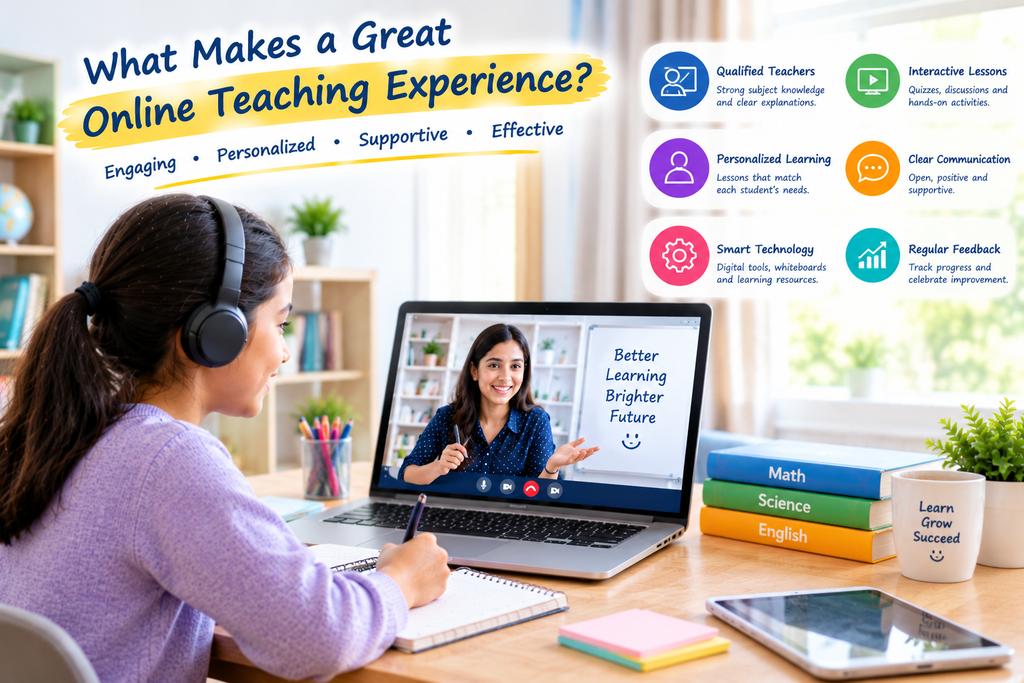
The quality of online teaching depends on several factors, including effective communication, interactive activities, personalized guidance, reliable technology, and regular feedback. Understanding these elements can help parents and students choose learning experiences that support academic development and build confidence.
Quick Answer: What Makes a Great Online Teaching Experience?
A great online teaching experience combines knowledgeable teachers, interactive lessons, personalized learning, clear communication, reliable technology, and regular feedback. It should encourage students to participate actively, understand concepts at their own pace, and receive the guidance they need to improve academically.
Key Takeaways
- Choose qualified teachers with strong subject knowledge.
- Encourage interaction through questions and activities.
- Provide lessons according to individual learning needs.
- Use digital tools to improve understanding and engagement.
- Maintain clear communication between teachers and students.
- Give regular feedback to support academic improvement.
- Create a comfortable and distraction-free learning environment.
- Monitor progress and adjust teaching strategies when necessary.
1. Experienced Teachers With Strong Subject Knowledge
The quality of teaching begins with the teacher’s subject knowledge and ability to explain concepts effectively. Students need guidance from someone who understands the subject and can simplify difficult topics.
An experienced teacher can identify common mistakes, provide relevant examples, and explain concepts using different approaches when students struggle.
For example, a Mathematics teacher might explain a difficult equation through step-by-step demonstrations before asking students to solve similar questions independently.
However, subject knowledge alone is not enough. Teachers should also understand how to communicate with students, recognize their difficulties, and encourage them to participate.
2. Interactive Lessons That Encourage Participation
One of the biggest challenges in online education is keeping students actively involved throughout a lesson. Listening to a teacher for an entire session without participating can make learning less engaging.
Interactive teaching methods help students stay focused and develop a better understanding of concepts.
Teachers can include:
- Short quizzes and polls.
- Question-and-answer sessions.
- Digital whiteboard activities.
- Group discussions.
- Problem-solving exercises.
- Subject-based games and activities.
For example, after explaining a Science topic, a teacher can ask students to answer a few questions or explain the concept in their own words.
These activities allow teachers to check understanding while giving students opportunities to participate actively.
3. Personalized Learning According to Student Needs
Every student has a different learning pace, academic background, and level of understanding. Some students may need additional practice, while others may benefit from more challenging activities.
A great online teaching experience recognizes these differences and provides suitable learning support.
A skilled online tutor can understand a student’s strengths and weaknesses through discussions, assignments, assessments, and classroom participation.
Based on this information, teachers can:
- Adjust the difficulty of lessons.
- Provide additional explanations.
- Recommend targeted practice exercises.
- Revise previously taught concepts.
- Set individual learning goals.
Personalized teaching helps students focus on the areas where they need the most support instead of following a fixed approach that may not suit everyone.
4. Clear Communication Between Teachers and Students
Communication plays an important role in successful online learning. Students should be able to understand instructions, ask questions, and express their difficulties without feeling uncomfortable.
Teachers should explain concepts in simple language, organize lessons properly, and encourage students to share their thoughts.
They should also check whether students have understood the topic before moving forward.
For example, after explaining a difficult English grammar rule, a teacher can ask students to create their own sentences. This helps identify misunderstandings and provides an opportunity for immediate clarification.
Clear communication creates a supportive learning environment and helps students feel more connected during virtual lessons.
5. Effective Use of Digital Learning Tools
Technology can make online lessons more engaging when used with a clear teaching purpose. Digital tools allow teachers to demonstrate concepts, share learning materials, and organize interactive activities.
Some useful digital resources include:
- Digital whiteboards: For solving problems and explaining concepts.
- Educational videos: For visual demonstrations and examples.
- Online quizzes: For checking understanding.
- Shared documents: For collaborative assignments.
- Digital worksheets: For additional practice.
- Recorded lessons: For revising previously taught topics.
Teachers should select tools according to the subject and learning objectives. Using too many applications can distract students, so technology should support teaching rather than become the main focus.
6. Regular Feedback and Academic Progress Tracking
Students need to understand whether they are improving and which areas require additional attention. Regular feedback helps them recognize mistakes and take practical steps toward improvement.
Teachers can provide feedback after assignments, quizzes, classroom activities, and assessments.
Effective feedback should explain:
- What the student has done correctly.
- Which areas need improvement.
- Why a particular answer is incorrect.
- What the student should practise next.
- How progress can be reviewed.
Progress tracking also helps teachers identify learning gaps early. If a student repeatedly struggles with a particular topic, the teacher can revisit the concept and provide additional support.
A good online tutor uses feedback to guide students rather than focusing only on their marks or test scores.
7. Flexible Scheduling and a Comfortable Learning Environment
Flexibility is another important part of online education. Students often have schoolwork, examinations, extracurricular activities, and personal commitments.
Online learning can help families manage academic support more conveniently through suitable class schedules.
A comfortable learning environment also makes a difference. Students should have access to a quiet study space, a suitable device, and a stable internet connection whenever possible.
Parents can support this by helping children organize their study area and follow a consistent learning routine.
However, flexibility should be balanced with regular attendance, preparation, and revision to maintain learning consistency.
8. Encouraging Student Confidence and Independent Learning
A great teaching experience should help students become confident and independent learners.
Teachers can encourage this by allowing students to attempt questions, explain their reasoning, and solve problems without immediately providing the answers.
Positive reinforcement can also help students become more comfortable with challenging topics.
For example, when a student solves a difficult problem independently, teachers can recognize the effort and explain which strategy helped them succeed.
Students should gradually learn how to review their work, identify mistakes, and prepare for upcoming lessons.
These habits support academic development beyond individual online sessions.
9. Strong Teacher-Parent Communication
Parents are important partners in a student’s educational journey. Regular communication between teachers and parents helps everyone understand the child’s academic progress and learning requirements.
Teachers can share information about:
- Subject-wise progress.
- Areas requiring additional practice.
- Homework completion.
- Classroom participation.
- Strengths and learning challenges.
- Future learning goals.
Parents can also share observations about their child’s study habits and difficulties at home.
This exchange of information helps create a more consistent support system and allows teachers to adjust their approach when needed.
How GenieClasses Supports a Better Online Learning Experience
GenieClasses aims to make online learning more accessible and personalized for students through technology-supported teaching and different learning options.
The platform offers one-on-one live sessions, group classes, customized worksheets, guided corrections, class recordings, and AI-powered learning insights. These features can support students with practice, revision, and understanding their learning progress.
Parents can explore GenieClasses to learn more about the available learning options.
For additional information, visit the About Us page or connect with the team through the Contact Us page.
You can also read What Parents Should Expect From a One-on-One Online Class to understand how individual attention can support a student’s learning experience.
Conclusion
A great online teaching experience is built on more than technology or virtual classrooms. It requires knowledgeable teachers, interactive lessons, personalized guidance, clear communication, and regular feedback.
When students feel comfortable asking questions and receive support according to their learning needs, they can develop stronger subject knowledge and greater confidence.
Parents should look for learning environments that encourage participation, monitor progress, and focus on long-term academic development. With the right teaching approach, online education can become a meaningful and effective part of a student’s educational journey.
Frequently Asked Questions (FAQs)
1. What makes a great online teaching experience?
A great online teaching experience includes knowledgeable teachers, interactive lessons, personalized guidance, clear communication, reliable technology, and regular feedback to support student progress.
2. How can teachers make online classes more engaging?
Teachers can use quizzes, polls, digital whiteboards, educational videos, discussions, and collaborative activities to encourage student participation and make lessons more interesting.
3. Why is personalized learning important in online education?
Personalized learning considers each student’s strengths, weaknesses, and learning pace. It allows teachers to adjust lessons and provide additional support according to individual requirements.
4. What role does an online tutor play in student learning?
An online tutor explains concepts, answers questions, identifies learning gaps, provides feedback, and guides students through activities that support their academic progress.
5. How does technology improve online teaching?
Technology supports online teaching through digital whiteboards, recorded lessons, online assessments, interactive learning resources, and collaborative tools that make lessons more flexible and engaging.
6. How can parents evaluate the quality of online classes?
Parents can evaluate online classes by considering teacher qualifications, lesson structure, student participation, communication, feedback, learning resources, and progress tracking.
7. Is online learning suitable for students of different age groups?
Online learning can support students across different age groups when lessons, teaching methods, and digital resources are appropriate for their age, academic level, and learning needs.
8. How can students get the most out of online classes?
Students can benefit by attending regularly, preparing before lessons, asking questions, completing assignments, reviewing class materials, and practising concepts independently.